
Old School
Stefanik/Faso vote "no" on tax bill, Mero found guilty on all counts in double murder, tax exemption questions on two more Albany properties, local car dealer taking Bitcoin
Tax bill
Both Elise Stefanik and John Faso voted "no" on the tax reform bill that passed in the House on Tuesday. The bill heads for the Senate today. Chuck Schumer said Tuesday that House Republicans will "Rue the day"the legislation was passed. [TU][Washington Examiner]
+Town and city governments are seeing a number of requests for people to pay their 2018 property taxes early, before the new law takes affect. [Gazette]
Two more Albany properties may have wrongly received tax exemptions
The Albany assessor's office says two downtown parking lots with ties to the Albany Convention Center may have wrongly been granted exemptions over the last seven years, but convention center authorities contend the exemptions are legal.[TU]


What was on the menu in Albany back then
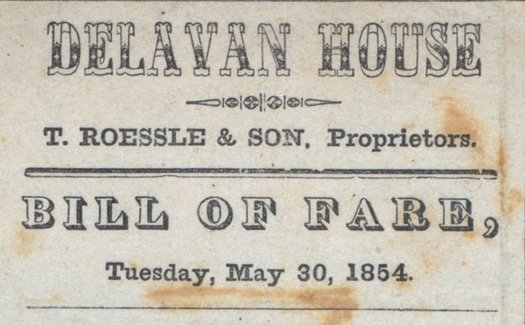
History so often is about dates and places and battles and famous people. But we often find ourselves curious about the day-to-day things from way back. What were people's houses like? What did they do for fun? What were they eating?
We had that last question in mind when we came across a group of historical menus that are online as part of the New York Public Library's collection. And a handful of them are from hotels and halls in Albany during the last 1800s and early 1900s.
So... what was on the menu?
That way, but with a different name
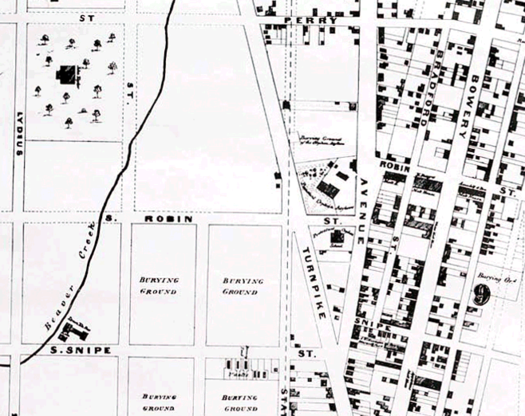
Lydius? Snipe? Bowery? / 1857 E. Jacob map of Albany via Wikipedia

Albany is old. Like, really old. (Well, as far as American cities go.) And so there are a lot of old maps of Albany.
Of course, one of the interesting things about old maps is seeing what's changed in the city in the time since. And we always find it fun to pick out street names that have changed.
So, here are a handful of notable Albany streets that changed names over the centuries...
That time Saratoga had an ostrich farm
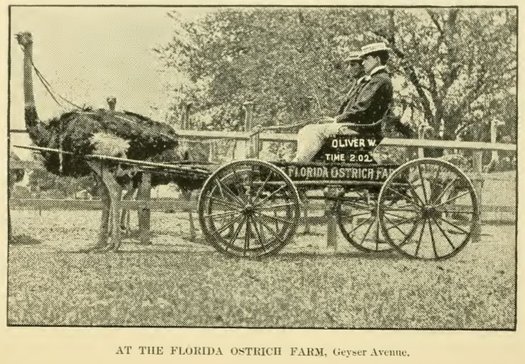
As one does in Saratoga.
Albany Archives pointed out today that Saratoga Springs had an ostrich farm back around the beginning of the 20th century. And something about this photo of people riding in an ostrich-drawn cart made us want to know more.
So, from Saratoga Illustrated: The Visitor's Guide of Saratoga Springs (1900):
on Geyser Avenue, about a half mile from the village, is one of the entertaining sights of Saratoga and is a unique feature. Here in an enclosure of about two acres are exhibited some of the finest specimens of African ostriches, Chinese golden pheasants, and English pheasants that are to be found in any country. Birds of all ages are here to be seen with various developments of plumage--from the slender pin feathers of the baby birds a few days old to luxuriant and brilliant plumages of the full-grown ostrich weighing 250 to 300 pounds each. Most of the ostriches have been brought to Saratoga from the celebrated ostrich farms in Florida, Arizona, and California, but some of the wee birds have first seen the light in the buoyant Saratoga atmosphere. Each pair of breeding birds is kept in a small corral of about 50 by 150 feet, and are fed on clover, hay, corn, oats, barley, etc. The younger birds roam in troops in larger enclosures, and a group of birds running with their wings out- spread, alarmed, it may be, at some unusual sight, is a most beautiful spectacle. The birds are all named, and some of the breeding birds bear the names of such distinguished magnates as President McKinley, Queen Victoria, Mark Hanna, Joe Wheeler, Napoleon and Josephine, Admiral Dewey and Miss Manila, etc.
A few facts, controversies, and quirks from the Northway's history
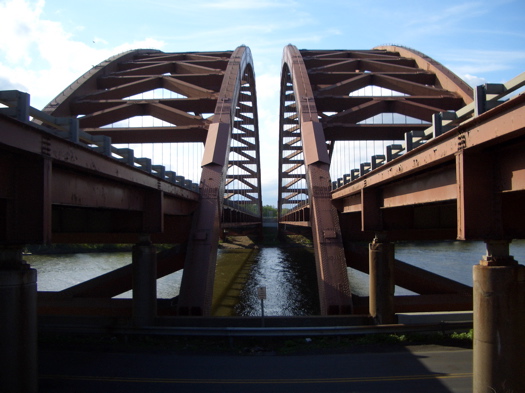
As you know, the Twin Bridges' official name is Thaddeus Kosciusko Bridge. (Kosciuszk-who?) / photo: Nicholas Hepler at Wikipedia (CC-BY-2.5)

As noted by Albany Archives, the section of the Northway from Albany to around Glens Falls officially opened this week in 1961 (that is, Nelson Rockefeller cut a ribbon).
That got us rummaging through the history of the Northway -- ahem, excuse us, The Adirondack Northway -- and here are a few bits you might finding interesting...
"Nellie Bly's Interesting Experience in Albany"
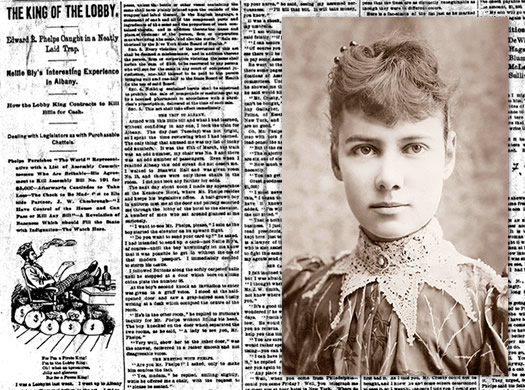
Nellie Bly and her article about "The King of the Lobby" in Albany.
Tuesday -- May 5 -- was the birthday of Nellie Bly, one of the most important and colorful figures in the history of American journalism.
In 1887 Bly, whose real name was Elizabeth Cochrane, became famous for pulling off an audacious undercover story in which she got herself checked into a New York asylum for the mentally ill and reported on the conditions. She'd later stoke her fame by racing around the world in less than 80 days.
If Nellie Bly was around today -- even the actual 19th century Nellie Bly, transported in a time machine -- she'd probably have her own online media startup and would be killing the competition. Vice, Vox, Buzzfeed, bow down before the original queen.
One of Bly's articles for the New York World brought to her to Albany in 1888. And the story will have a familiar ring to it: she came here to buy some state legislators.
How to commemorate a traitor
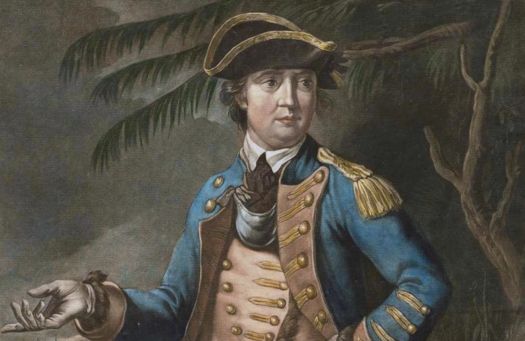
Remembering Benedict Arnold -- it's complicated
People are complicated. Which makes history complicated. Much more complicated than school textbooks might lead us to believe.
And in some cases, complicated history makes for complicated monuments -- like the monuments in Saratoga that commemorate Benedict Arnold.
That time -- not even that long ago -- that Albany annexed a chunk of Bethlehem
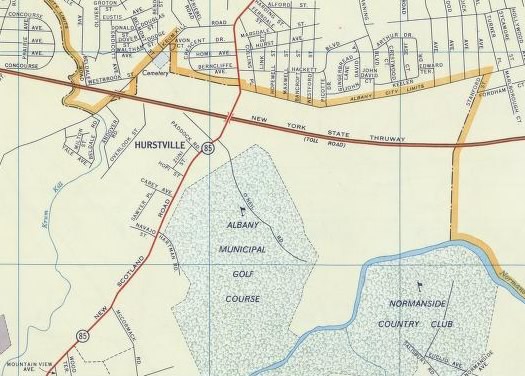
Was Bethlehem, is now Albany.
There was a bit of ripple this week when Albany mayor Kathy Sheehan mentioned the topic of annexation during a panel discussion about poverty and cities. From an article over at Capital:
"We could expand," Sheehan said. "States that have elastic cities where there's an ability annex do not have the same stratification that we see here in New York State. So there are states where you can grow your way out of this situation because you can expand your tax base by annexing. We can look at that, but we could also look at how we fundamentally fund our cities ... because cities still grow every day. The city of Albany doubles in population every day when people come here to work.
"We have to look at all levels at how we are funding our cities and have a conversation with those wealthier, surrounding suburban communities about what it is we need to do to address that inequity that we have," she said.
So this was a more a nod to the idea than actually raising it as a realistic option. (Update: Here's Sheehan emphasizing that point. [TWCN]) And that makes sense, because the idea that Albany could/would annex one of its surrounding suburbs seems... highly unlikely.
But. You might be surprised to find out that Albany has done just that in the past -- and it wasn't even that long ago (on the scale of Albany history). And the episode highlights why it would be so unlikely today.
That time an Albany druggist made and sold cocaine toothache drops
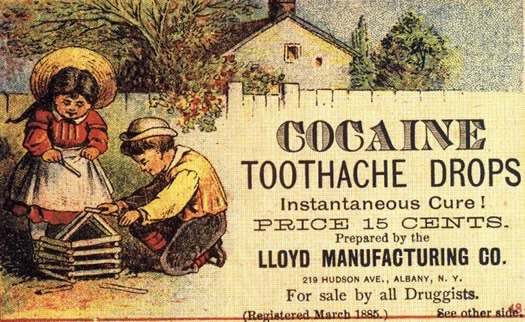
There's a (in)famous vintage ad for "Cocaine Toothache Drops" produced by the Lloyd Manufacturing Co. of Albany, dated to the mid 1880s.
It's one of those people-in-the-past-were-so-crazy kind of items, the sort of thing that prompts smiles and laughs now. So much so, that this particular vintage age is seemingly everywhere online. And someone sends it to us here at AOA at least once every year.
The ad popped up in our inbox again recently, so we figured we try to find out the backstory.
Or, to put it another way: How did a pharmacist in Albany end up selling cocaine intended for teething children?
The pivot and center of Albany's whirl
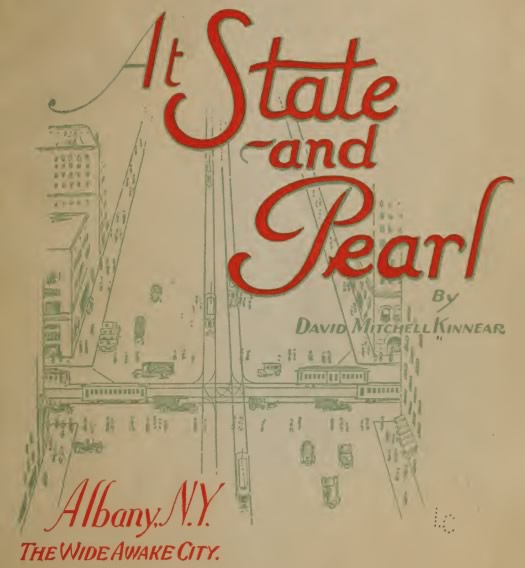
The Wide Awake City.
Local officials are always trying to better sell this area to people from outside the region in an attempt to attract new business and residents. Consultants are hired, reports written, marketing campaigns planned.
But maybe they should try extolling the area's virtues in verse.
A 1916 pamphlet touting Albany -- "At State and Pearl" -- did just, proclaiming Albany "The Wide Awake City." (A tip of the hat to Albany Archives for pointing it out.) The pamphlet is a glimpse at how the city was marketed a century ago. It goes on:
INVITATION TO ALL
Come and Live with us in Beautiful, Historic Albany (Capital City of the Empire State)
For delightful location, satisfactory climate, business facilities and social environment, unexcelled in the United States.
It then launches into multiple pages singing the city's praises. In verse.
Century-old advice from Trojans
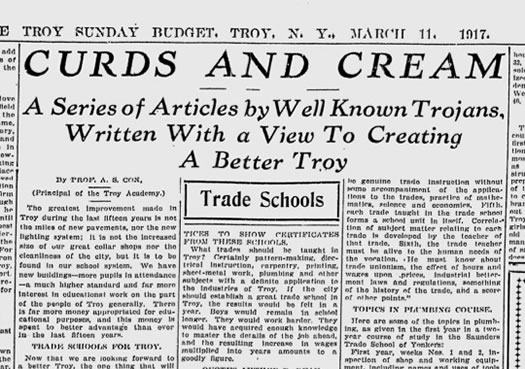
A clip from the Troy Sunday Budget.
It's always fun to have a peek into the history of a city you love. That is why I was tickled to find a bunch of articles from esteemed residents on how to improve Troy -- from 1917.
The Troy Sunday Budget, a weekly newspaper printed from 1916-1927, published pieces called "Curds and Cream, a series of articles by well known Trojans, written with a view to creating a better Troy." Some articles advocated for increased patriotism, while others rallied for a Housewives' League. And some issues are still a topic of discussion today.
Here are a few clips that caught my eye...
Maybe there wasn't enough money for a spaceship
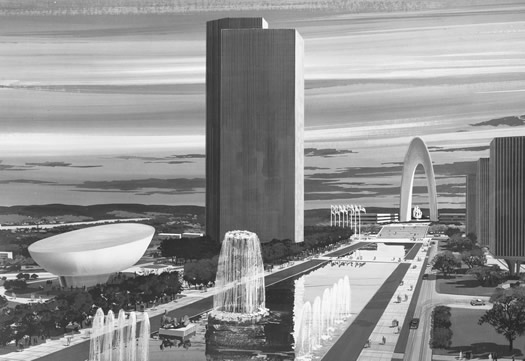
OK, it probably wasn't a spaceship. Probably.
One of the things we like about flipping through old architectural renderings is seeing the things that were proposed and, for whatever reason, never ended up being built. Because sometimes there's some out-there stuff.
An example we came across today in UAlbany's online photos archive: Renderings of the Empire State Plaza that show some sort of arc spaceship-type-thing where the State Museum now stands. One of the images is above.
There renderings are part of a small group showing what the then-not-constructed ESP could have looked like. Here are the renderings, along with a few things that struck us about them...
That time whales swam to Albany
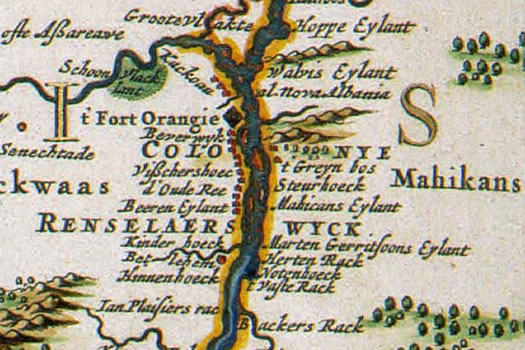
From a circa 1684 map of what was then called New Netherland.
That article about a possible shark in Lake Ontario reminded us about a story we once heard about whales swimming up the Hudson River to Albany.
Just another fish (er, cetacean) story, you say?
Well, it's true. Really.
A dance with the princess
Check it out: It's film clip from the 1959 ball at the Washington Ave Armory honoring then Princess Beatrix of the Netherlands. The clip includes of the princess dancing with Nelson Rockefeller. We came across the video today via The Albany Muskrat, who you should be following on Twitter.
Other than the hey-how-about-that factor, so what? Well, the Princess Beatrix's visit is said to have been the catalyst for Rockefeller to push for the creation of the Empire State Plaza, because the condition of the city embarrassed him as he and the princess toured the city. (A later visit from Danish royalty apparently had a similar effect.)
Beatrix was in Albany as part of a tour of the Hudson Valley for the 350th anniversary of Henry Hudson's voyage up the river. The 21-year-old princess arrived in the city via 65-foot yacht, and disembarked looking "radiant in her gray shantung dress with matching hat and belt."
Albany, in an alternate future
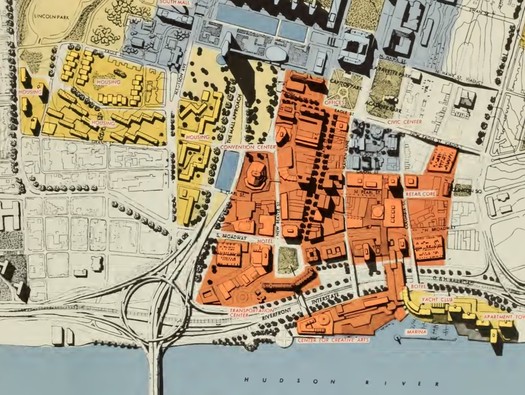
As proposed in 1963.
Check it out: A comprehensive plan for redeveloping the city of Albany -- as proposed in 1963.
Albany Archives sent along the link. And as AA commented:
A convention center on Elk St, housing at Jennings Landing, "The Washington Park Arterial"... it's so scary! Heres the take away quote: "By 1980, central area of Albany, like cities all over the United States, will be almost completely rebuilt."
The plan is fascinating, both because parts of it are remarkably prescient and others are totally bonkers.
We've pulled a handful of images and maps, along with a block of text that floats some options that now sound completely unbelievable...
The Meade Brothers' daguerreian gallery
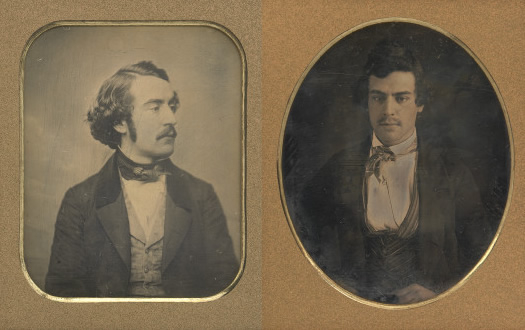
The Brothers Meade, Charles (left) and Henry.
Photography is so ubiquitous now -- almost everyone carries around some sort of camera in their pocket -- that it's a bit difficult to imagine a time when it was a new and rare. That to be a photographer was to be on the avant garde of art and technology.
As it happens, two of the earliest famous photographers were from Albany: Henry and Charles Meade.
Portraits of Martin Van Buren, in honor of his birthday
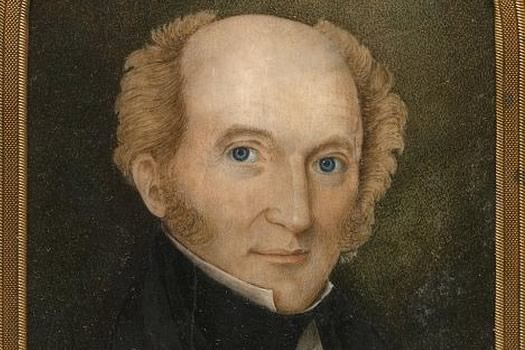
Look at those blue eyes.
This past Thursday was the 231st birthday of Martin Van Buren -- eighth President of the United States, the first president to be born US citizen, and the most famous native of Kinderhook, New York.
Because it was MVB's birthday this week, and it's Friday -- and, you know, just because -- here's a collection of portraits in honor of his 231st. (OK, some of them aren't technically portrait, but they're interesting to look at.)
OK...
Why is there a mayor on my oatmeal?
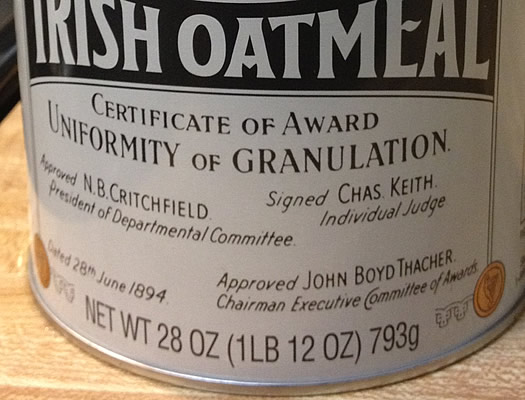
Sometimes we end up with odd legacies.
Speaking of Albany mayors and their representations on food, Barry T emails with the photo above:
Why is my oatmeal approved by John Boyd Thacher??
And to Barry, we say: That is a totally reasonable question.
Riding the trolley -- everywhere
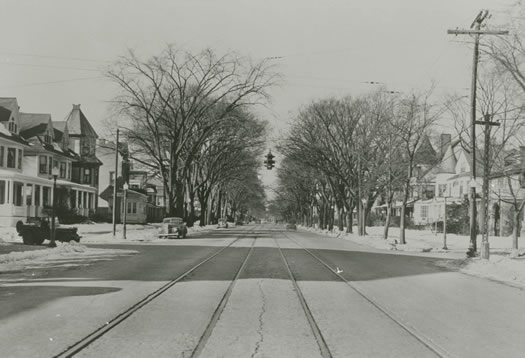
Madison Ave in Albany sometime during the 1940s. Courtesy of The College of Saint Rose Archives.
There's something about trolleys that lights people up -- even though a lot of people weren't even alive the last time a trolley rolled through Albany. It's been almost 70 years since the lines stopped.
We were thinking about trolleys again this week after seeing this photo from the College of St. Rose Archives. It's Madison Ave at Partridge, facing west, sometime in the 1940s, right about the time the trolleys stopped. We love the way the tracks lead away covered by the canopy of trees.
That photo prompted us to dig through some of the history of trolleys in Albany -- which is like looking through some alternate transit universe.
The other Albanies
Okay, we all know we're not the only Albany in the United State. Though we are the oldest Albany in the US, and still the biggest.
And, as it turns out, many of those other Albanies were named in honor of this Albany...
What is the oldest business in Albany?
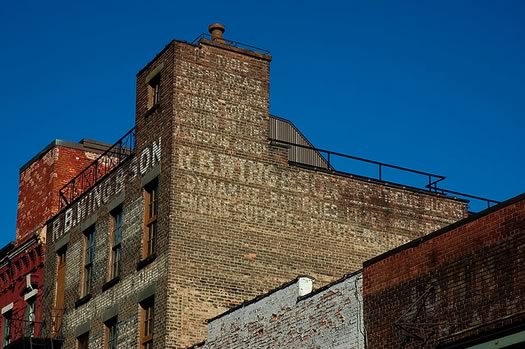
R.B. Wing and Son once had a claim to the title.
Update: Carl's found one that's even older.
Over at Hoxsie I recently unearthed a 1905 ad for Danker Florist, which is still going strong today. And that led to the question: What might be the oldest business still running in Albany?
There are a few contenders.
The Rotterdam Square Mall cemetery
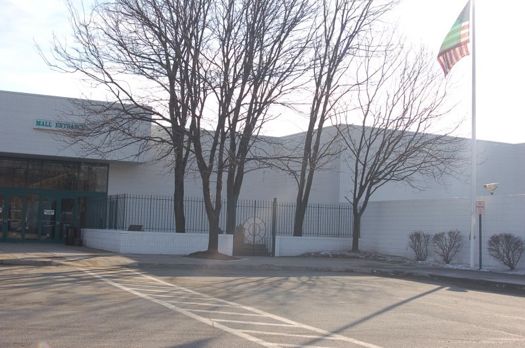
Rotterdam Square Mall -- where you can pay your respects on the way to Macy's.
Sure, some shopping malls can be compared to graveyards (insert Latham Circle Mall joke here), but one local mall actually contains a graveyard. Brings new meaning to "shop 'til you drop."
Not only is Rotterdam Square Mall the home of Macy's and T.J.Maxx, it's also the final resting place for several members of the Vedder family, Dutch pioneers who had inhabited Schenectady County since the late 1600s.
So how does a mall get built around a graveyard? The story behind the cemetery in the Rotterdam Square mall structure is a gripping tale of drinking water, business interests, human remains, and a 10-year struggle with ticked-off citizens.
Historic floods in Troy
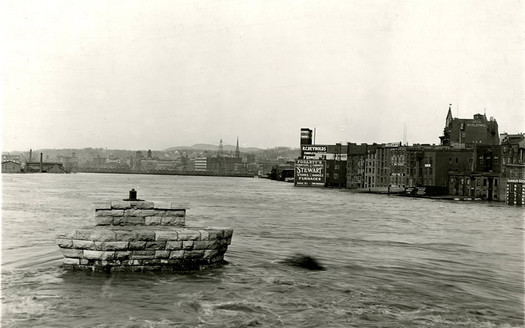
The 1913 flood in Troy.
Flooding from Irene was bad in parts of the Capital Region. Really bad. But in Troy and Albany, the flooding has been worse -- though not by a lot.
The Hudson River reached crested at 27.05 feet at Troy this past Monday afternoon, which ranks as the fourth highest flood on record in the Collar City.
Here's the story behind the worst.
Albany, academic fashion trendsetter
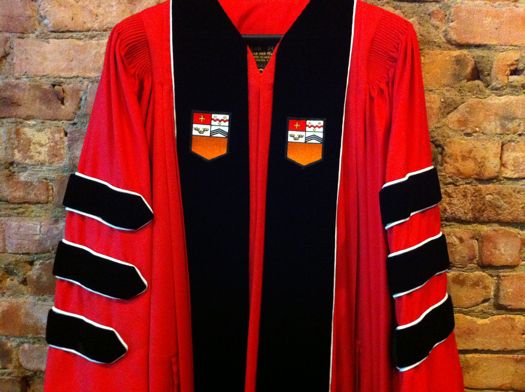
Bright.
Albany didn't really have a full-fledged university until the 1960s -- it missed its chance when the Albany Rural Cemetery board miffed Leland Stanford.
But by that time, the city had already left a lasting mark on American academia: the standardized cap and gown.
The longstanding New York tradition of "investments in legislators"
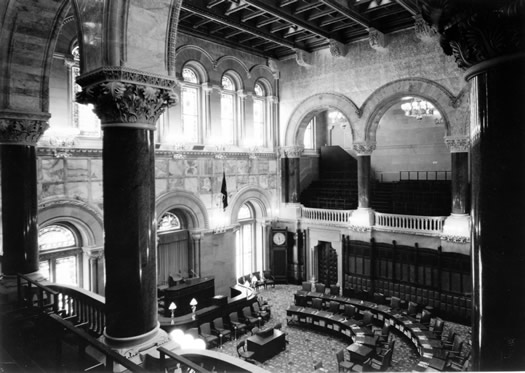
Among the many paths used to influence in this chamber over history: "the society of young ladies."
Andrew Cuomo and state legislative leaders are expected to officially announce a collection ethics reforms today. In a late Friday press conference about the deal, Cuomo called the proposals "tough and aggressive."
Advocates of legislative ethics reform can take pride in being part of a long tradition. Nothing is new under the sun -- and even less is new in the New York State legislature.
A future in plastics and billiard balls
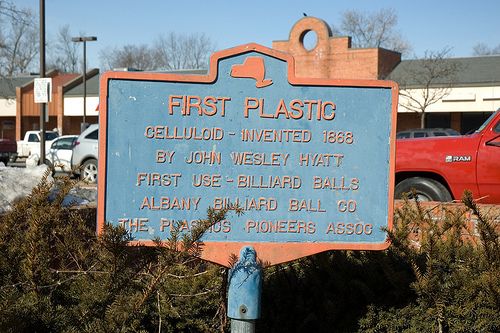
One word: Plastics.
"There's a great future in plastics. Think about it. Will you think about it?"
That's what Mr. McGuire said to Benjamin Braddock in The Graduate. That classic movie line was uttered almost exactly a century after John Wesley Hyatt first envisioned a future in plastics -- right here in Albany.
It started with an accident -- and a billiard ball.
The Moses fountain in Washington Park
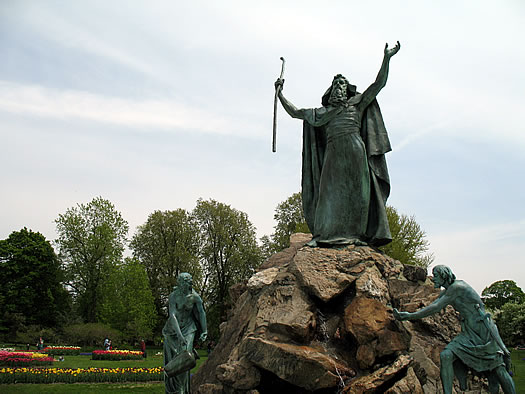
And thou shalt smite the rock, and there shall come water out of it, that the people may drink.
Anyone in Albany knows the Moses fountain in Washington Park. But few know how this biblical tableau came to be one of the most striking features of the park, or why it is called the King Memorial Fountain.
So, why is this splendid fountain there -- and whom does it memorialize?
What Abner Doubleday isn't famous for -- but actually did do
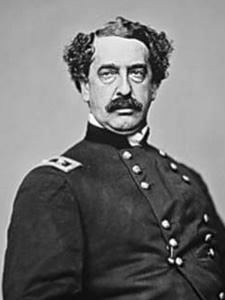 Tuesday was the 150th anniversary of the start of the Civil War, which prompted a bunch of stories about Abner Doubleday. Yep, the guy who supposedly invented baseball (but didn't).
The Ballston Spa native was second-in-command at Fort Sumter in April, 1861 -- and fired the first Union shot in the war (after a night of bombardment by the Confederacy) [NYS Military Museum]. Wrote Doubleday years later in a memoir:
In aiming the first gun fired against the rebellion I had no feeling of self-reproach, for I fully believed that the contest was inevitable, and was not of our seeking. The United States was called upon not only to defend its sovereignty, but its right to exist as a nation. The only alternative was to submit to a powerful oligarchy who were determined to make freedom forever subordinate to slavery. To me it was simply a contest, politically speaking, as to whether virtue or vice should rule.
The action at Fort Sumter followed an invitation from the Confederate forces, arrayed to pummel the fort with shells, to surrender -- the Union commander very politely declined. The Union troops eventually did surrender. [NYT]
Doubleday would go on to become a major general and fight at the Battle of Gettysburg. He took over command of his corps after its general had been killed, and his outnumbered men held off Confederate forces long enough for backup to arrive. [Saratogian]
After the war, Doubleday was sent to San Francisco to head up recruitment efforts there and was involved with the founding of the city's first cable car company. He was later stationed in Texas before retiring in New Jersey. [Military History About]
The house where Doubleday was born in Ballston Spa is still there. [Saratogian]
About not inventing baseball: John Thorn, baseball's official historian, writes in a new book that the myth of Doubleday being the inventor of baseball was the work of "unprincipled advocates with ulterior motives" -- in Doubleday's case, the sporting goods magnate Albert Spalding. [Baseball America] [TU] [NPR]
An entire library of Albanians
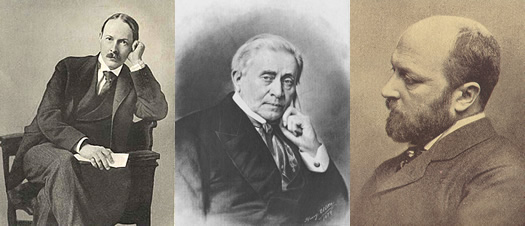
Cuyler Reynolds, Joseph Henry, Henry James
Last week, AOA wrote about Bill Pettit, whose library consists of Moby Dick. Lots of Moby Dick.
A century ago, a prominent Albany institution suggested a slightly broader collection -- an entire library of books written only by Albanians.
The highway that was almost buried under Washington Park
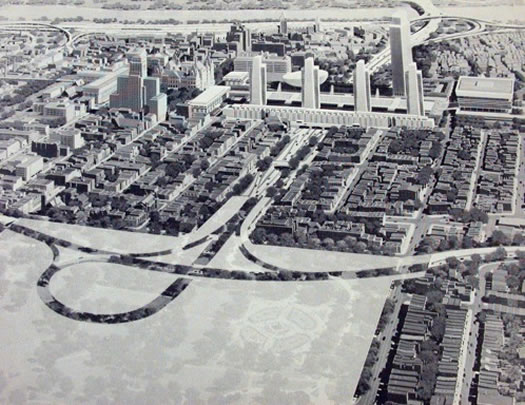
What could go wrong?
Ever wondered why the Dunn Memorial Bridge provides a ramp to thin air? Why the Livingston Avenue exit of I-90 is so overbuilt, and ends so abruptly? Why there are extra tunnels underneath the Empire State Plaza? Or why Corporate Woods has its own highway exit?
They're all vestiges of a highway system that was never built.
The Livingston Avenue Bridge
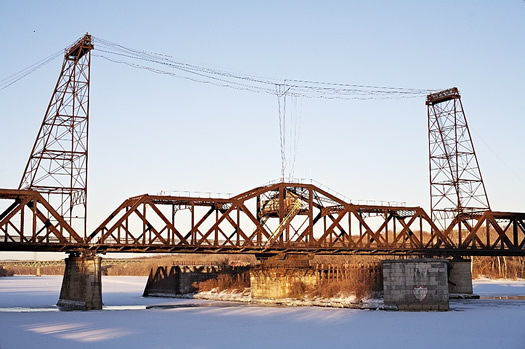
It's spanned the Hudson a long time. How long? Well...
The Livingston Avenue Bridge, the graceful and anachronistic swing bridge that carries trains across the Hudson River at Albany and still swings open to let larger ships reach Troy, has been part of the landscape longer than anyone now alive. It is often cited as dating to the Civil War.

Like many local legends, that's partly almost true.
Six bits of trivia about the six presidents from New York State
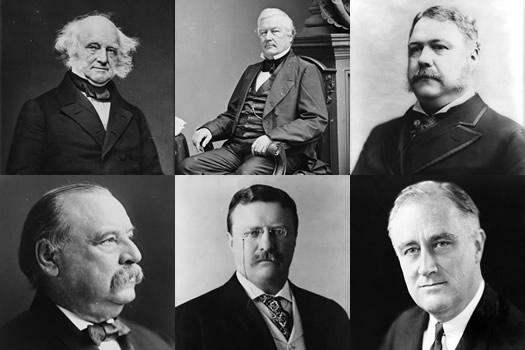
Van Buren, Fillmore, Arthur, Cleveland, TR, FDR
Six US presidents hailed from the Empire State.
Here are six things about them that you probably didn't learn in school...
Why Abraham Lincoln arrived in Albany with "huge whiskers"
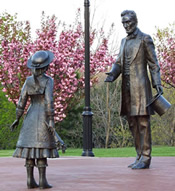 Paul Grondahl's story today marking the 150th anniversary of Abraham Lincoln's visit to Albany -- especially the part about Lincoln arriving "tired, sunburned, adorned with huge whiskers" -- made us think of a totally charming story involving the great president and New York State.
We were driving on the Thruway south of Buffalo a few months back when we needed to stop for gas, and somehow ended up in Westfield. As far as we can tell, the village is famous for two things: 1) it's the self-proclaimed "grape juice capital of the world" and 2) the following story.
In the fall of 1860, Lincoln received a letter from 11-year-old Grace Bedell of Westfield, urging him to "let your whiskers grow":
... you would look a great deal better for your face is so thin. All the ladies like whiskers and they would tease their husband's to vote for you and then you would be President.
Jump ahead to February 16, 1861. Lincoln is riding a train from Springfield, Illinois to Washington, DC -- and the trip takes him through western New York (and, a few days later, to Albany).
Saints vs. The State for Washington Avenue
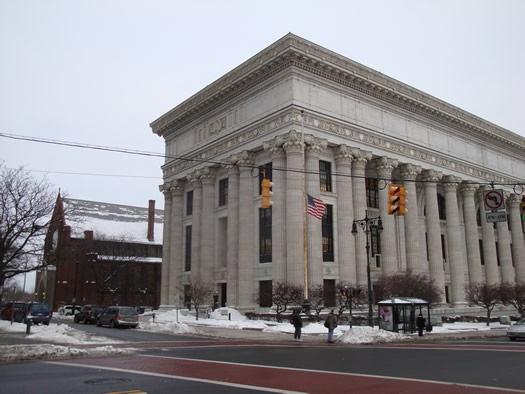
The fifth largest cathedral in the US -- if you can see around the State Ed building.
Nestled behind the State Education Building on Washington Avenue is a -- what is that? Is that a church?
Yes. And that sound you hear is William Doane rolling over in his grave.
The Cathedral of All Saints, Albany's Episcopal cathedral, is on a cramped lot behind its massively columned neighbor. The building is quite beautiful, and it seems odd that such a grandiose structure should be tucked away on a side street. Why didn't they get a bigger lot? We're not that pressed for building space here in Albany. What's the cathedral doing back there?
Well, there's a story behind this. And it's a story of lifelong ambitions and bitter feuds, of superlatives and dreams, played out along Albany's Washington Avenue.
Dissected Maps
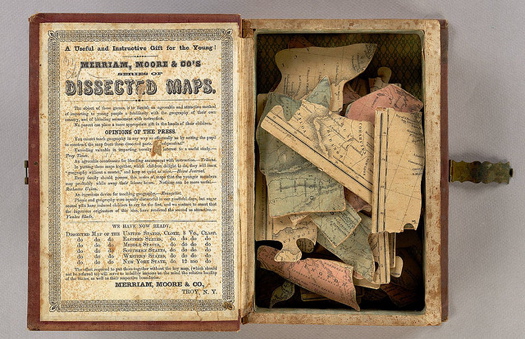
Made in Troy.
Before he moved to Springfield, Massachusetts to publish the famous dictionary with his brothers, Homer Merriam had a little business in Troy. Merriam, Moore & Co. made globes, maps, and something called a "Dissected Map" -- a type of puzzle that's still popular today.
The Albany Penitentiary
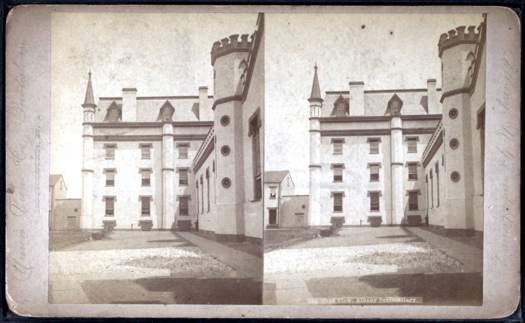
The Albany Penitentiary once stood near what today is the V.A. hospital.
From petty thief to Lincoln assassination conspirator, if you were a criminal in Washington D.C. in the 1860's -- you were going to be sent up the river.
Way up the river. To Albany.
The Albany Penitentiary served for decades as the prison for the District of Columbia.
The world's first television drama
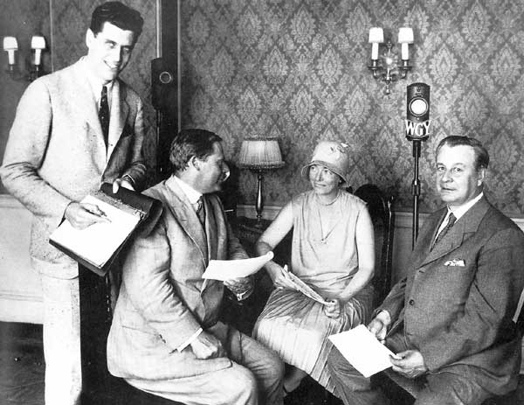
The cast of the world's first television drama, on set in Schenectady.
Here's a little something to think about while you're watching Mad Men on one of the hundreds of channels on your HDTV: The very first television drama was filmed in Schenectady in 1928.
It was a little play called The Queen's Messenger, a British drama with more special effects technicians than there were television sets in the Capital Region.
More on how it was filmed, plus a neat clip that shows how it worked, after the jump.
Elkanah Watson and the paving of State Street
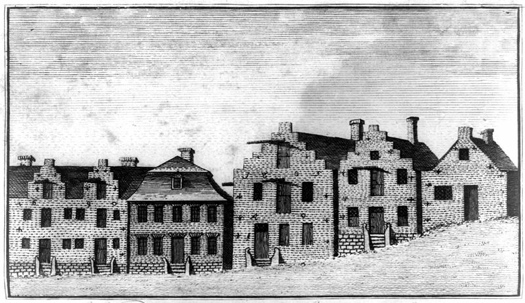
Albany - Pre Watson
Elkanah Watson was a forward thinker. When he came to Albany from Massachusetts as a trader back in 1789 he had some big plans for making his adopted city a better place to live.
But Elkanah Watson learned very quickly that in Albany, no good deed goes unpunished.
Ichabod Crane: the Capital Region connection
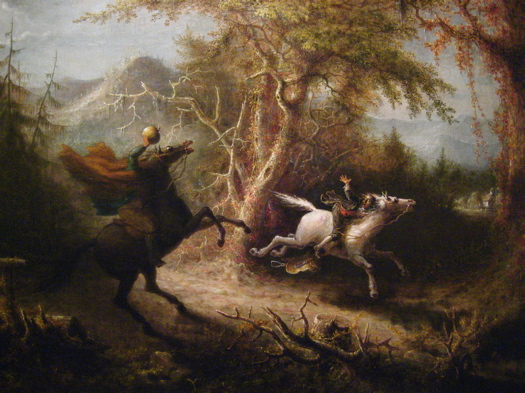
Ichabod Crane just sounds scarier than Jesse Merwin.
Washington Irving, perhaps the first great American writer, is still well-remembered in his Hudson Valley haunts. Irving created Rip Van Winkle, the legend of the Headless Horseman and more. His home along the river in Tarrytown, "Sunnyside," is a tourist attraction, and in 1996, North Tarrytown decided to rename itself Sleepy Hollow.
It is said that it was among the old Dutch of Tarrytown that Irving first heard the tale of the ghost of a Hessian soldier who had lost his head to a cannonball during the Revolution. But it was in the Columbia County village of Kinderhook, that Irving found his model for Ichabod Crane, the timid schoolteacher who is frightened off by the headless apparition.
On the origins of apple pie a la mode
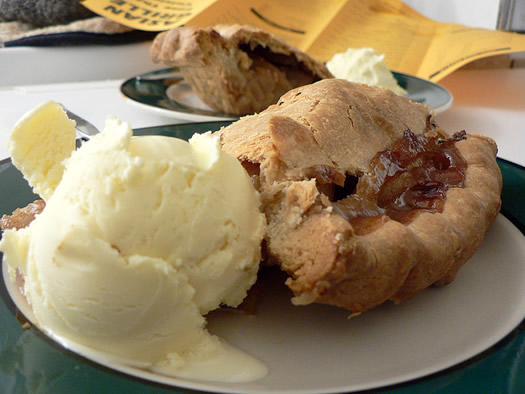
It seems obvious. But someone had to do it first.
While skimming through some info for the post earlier this week about the Philly's Apple Pie ice cream at Stewart's, we came across a story about the origin of pie a la mode -- which has a local connection.
The story goes that it was invented (if that's the word) in Washington County in the 1890s (the exact date is unclear) at the Cambridge Hotel by a regular diner there named Charles W. Townsend, who liked to eat his apple pie with vanilla ice cream.
Why Stanford isn't in Albany
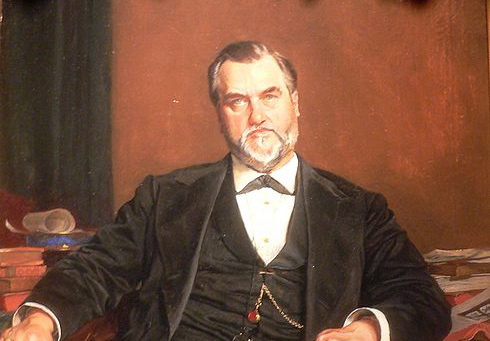
Leland Stanford of Watervliet
The University at Albany surely has its fine points, but even its greatest advocates would agree, it's no Stanford.
But it could have been Stanford.
Literally.
Uncle Sam Wilson
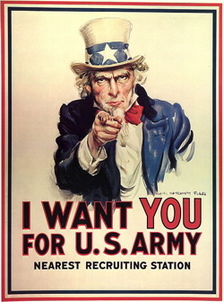 This weekend the Collar City celebrates its most famous son -- Uncle Sam -- with its annual Uncle Sam Parade and Festival.
You can't drive through Troy without seeing all kinds of monuments to Uncle Sam: a statue, a bus depot, a bowling alley. (You'd think he was some sort of pork distributing state senator.) And, of course, there's the famous image.
But the inspiration for that image was a businessman and meat distributor who probably didn't look a thing like the famous recruitment poster.
Running on Albany time
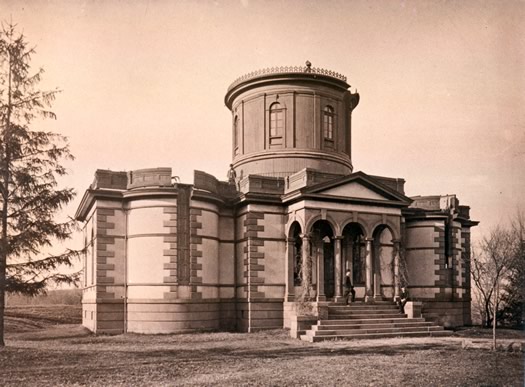
The first Dudley Observatory, in north Albany.
In our global civilization, we're accustomed to dealing with time zones and standard definitions -- Greenwich Time, Eastern Time, Daylight Savings Time.
If one plan from before the Civil War had succeeded, the Northeast might have been on Albany Time.
It started in 1851, with the founding of the Dudley Observatory.
Albany bashing has a long history
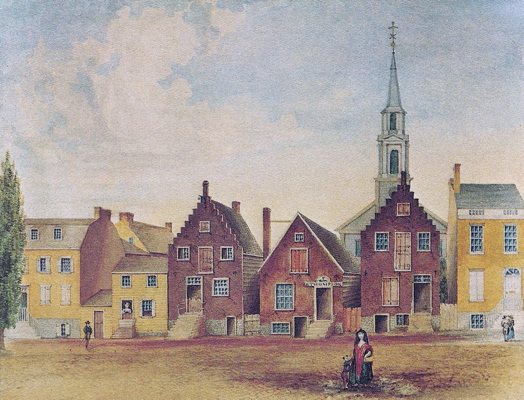
Was Pearl Street dead back in the day?
The recent item proclaiming Albany to be one of America's 10 dead cities was just the latest in a long tradition of bashing our capital city.
Who knows when Albany-bashing began, but I found evidence of it that dates back to 1789, and is a kind of reminder that in all criticism, you have to consider the source.
The Normanskill's Norman
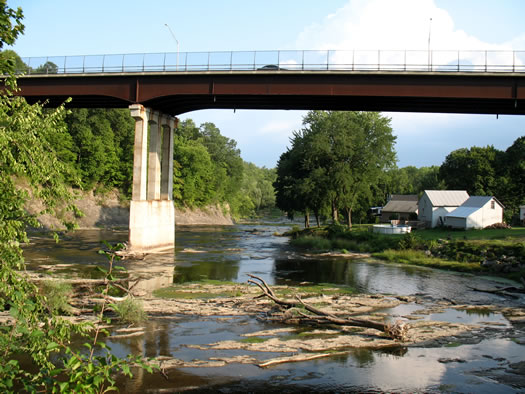
Delaware Ave above, the Normanskill below.
Around Albany, many of our most familiar place and street names come from notable local figures.
Louis Menand was a noted horticulturist of his time; Daniel Manning published the Albany Argus and became US Secretary of the Treasury. Slingerlands was named for farmer Teunis Slingerland.
So, who was the "Norman" of the Normanskill?
Where Menands got its name

What do exotic flowers have to do with this Albany County village?
If you live in the Capital District, you hear the name Menands on a regular basis. You may live there, drive through the Albany County villiage, or just hear it on the news and in conversation.
So what is a Menand?
Well, the question really is who was Menand?
For the answer, you'd have to look back to the late 1800s, when everyone from well-to-do collectors of exotic flora, to prosperous homeowners with gardens, to cemetery visitors who wanted to pay tribute to a loved one -- would go to Menand's.
Al-Tro Park: the Capital Region getaway in Menands
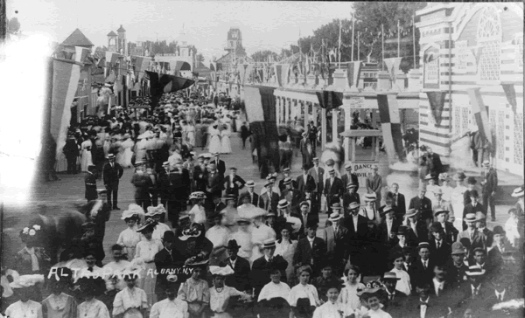
Al-Tro Park: "Pleasure Island" in Menands.
A century ago, Albanians looking for summertime fun didn't get in the car and drive for hours to a Six Flags or a water-park.
They got on board a trolley car or steamship and headed to Menands to find the finest in 19th-century entertainment.
... said KGB about Drawing: What's something that brought you joy this year?