
Items tagged with 'environment'
Follow up: Radix Center
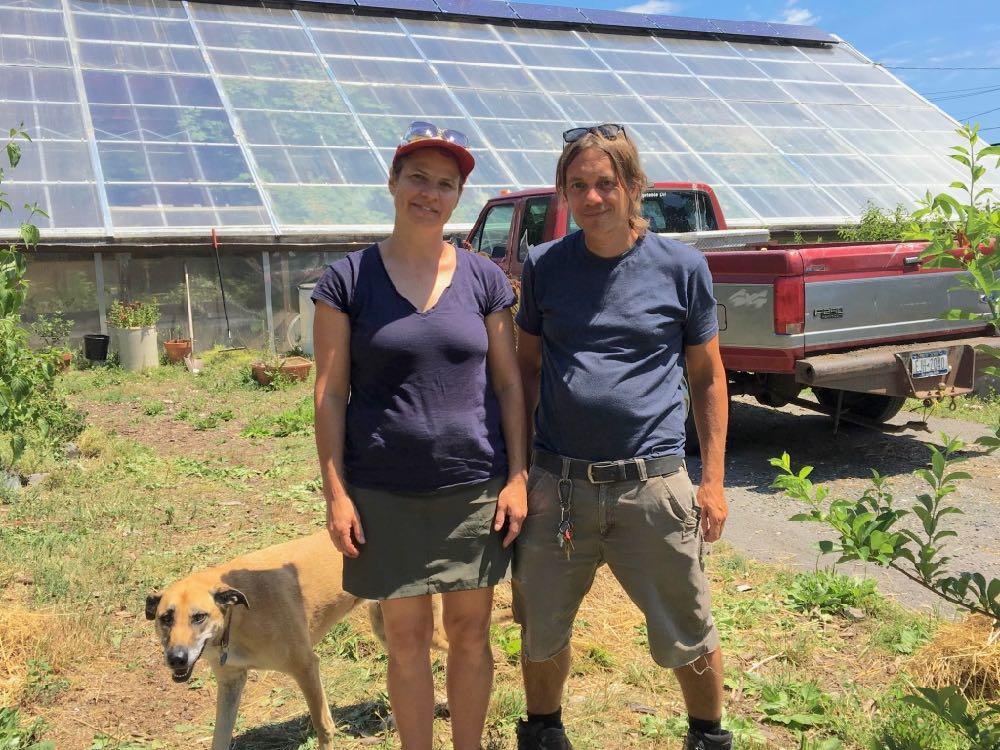
Stacy Pettigrew and Scott Kellogg outside the greenhouse at Radix.
AOA is on summer break. So we'll have new follow-ups with people we've met and covered during the last year.
A little more than seven years ago Scott Kellogg and Stacy Pettigrew won the very first AOA Start Up Grant competition with their plans for an aquaculture to grow fish and watercress at the [then] new Radix Center for Ecological Sustainability. They were in the midst of constructing an 18-foot greenhouse on a corner of Grand Street in Albany's South End.
Almost a decade later the greenhouse is overflowing with plants, they're selling fish and watercress, running a composting business, raising animals, partnering with neighborhood organizations, and teaching students and city dwellers about their connection to nature -- all while raising two daughters and working on their PhDs.
And still, they found time to talk with us about how things at Radix are going.
There's a new type of tick in New York State
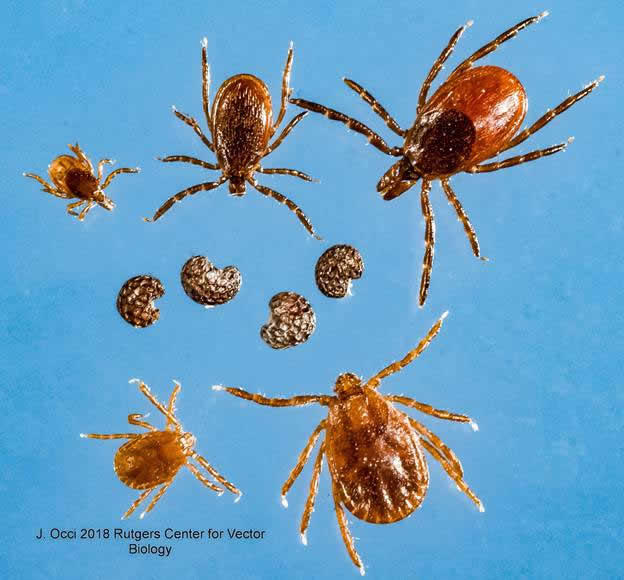 There's a new type of tick in New York, the state Department of Health announced Tuesday: Haemaphysalis longicornis -- the "longhorned tick." DOH says it was found in multiple locations in Westchester County. From the press release:
While the longhorned tick has transmitted disease to humans in other parts of the world, more research is needed to determine whether this can happen in the United States. Regardless, New Yorkers should continue to take steps to protect themselves, their children and their pets against ticks and tickborne diseases that are present in New York State.
This tick is also a concern for the New York State agricultural industry and may pose a threat to livestock. Farmers should continue to work with their veterinarians to check their animals, particularly cattle, sheep and horses, for exposure to ticks and to ensure their parasite control plans are up to date and working. Symptoms of tick-borne disease in cattle include fever, lack of appetite, dehydration, weakness and labored breathing.
That photo on the right compares deer ticks (top) and longhorned ticks (bottom) with poppy seeds (middle) for scale. (Click on the photo for a larger version -- we figured no one needed to see that up close unless they wanted to.)
The High Peaks are crowded, so the DEC would like to promote "sustainable tourism" in the Adirondacks
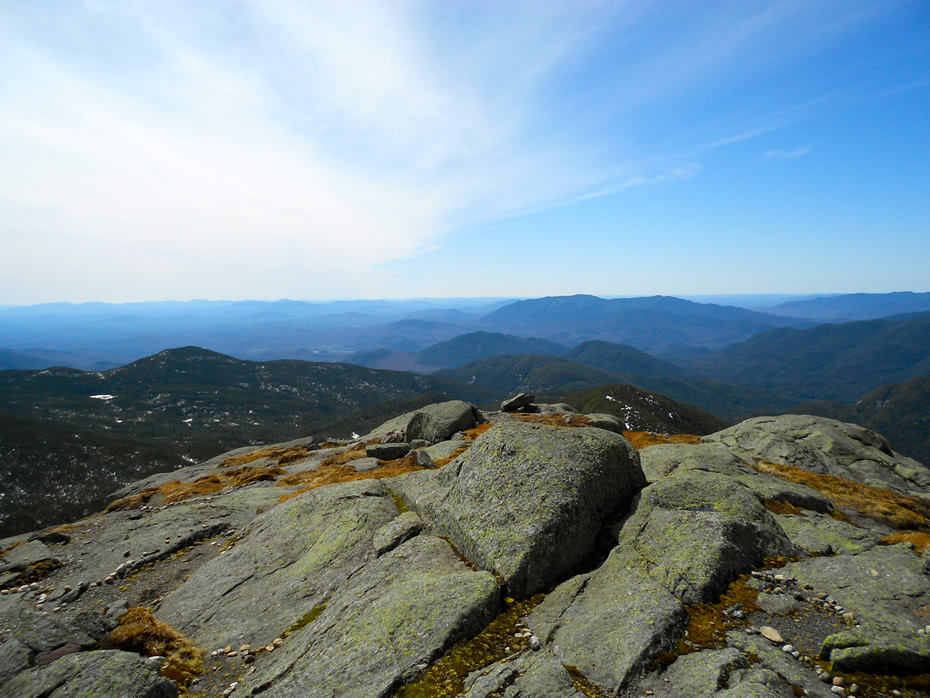
The summit of Mt. Marcy. / photo: Casey Normile
The Adirondacks -- the High Peaks especially -- have been a very popular spot for hikers over the last decade or so. And that's resulted in all sorts of related issues, from crowding to trash to parking problems.
This week the state Department of Environmental Conservation announced it's taking up "a multi-year, comprehensive effort to promote sustainable tourism, and address public safety in the Adirondacks." Press release blurbage (emphasis added):
Popular destinations on DEC lands within the Adirondack Park such as the High Peaks, Dix, Giant and Hurricane Wildernesses, Baxter Mountain, and the Saranac Lake 6'er peaks, are attracting an unprecedented number of users.
To improve public safety and reduce impacts to natural resources in the area, DEC held four focus group meetings this past winter to generate ideas and information to support recommendations, particularly to address overuse challenges in the High Peaks region and the Route 73 corridor between Exit 30 of the Northway and Lake Placid in the Adirondacks. The meetings were held in partnership with the towns of Keene and North Elba and involved a wide range of stakeholders. With input from DEC land managers, the meetings helped the agency identify specific strategies and actions to be taken in 2018 and 2019.
Actions along the Route 73 corridor are scheduled to start during the July 4th holiday week and are being implemented with state agency partners and municipalities. The first phase of actions include:
A very animated explainer about ticks
This might not be the claymation that we want, but it's the claymation that we need.
The clip embedded above is a short claymation explainer about the life cycle of black-legged ticks and ways to protect yourself against them. It's from the New York State Integrated Pest Management program, which is associated with Cornell and the Cornell Cooperative Extension.*
Ticks and the diseases they carry are a big problem in this part of the country. And just last week the Cuomo admin a announced a new round of increased efforts to address the proliferation of ticks and the diseases they spread, such as Lyme.
But back to the video clip... It was created by Max Helmberger, an entomology grad student. Here's a Cornell news article about his work. And, yep, he has more claymation science videos on Youtube.
* Integrated pest management is a fascinating topic. It's basically about how humans can better deal with things like insects and weeds and plant diseases in ways that hurt the environment as little as possible.
Spotting the spotted lanternfly
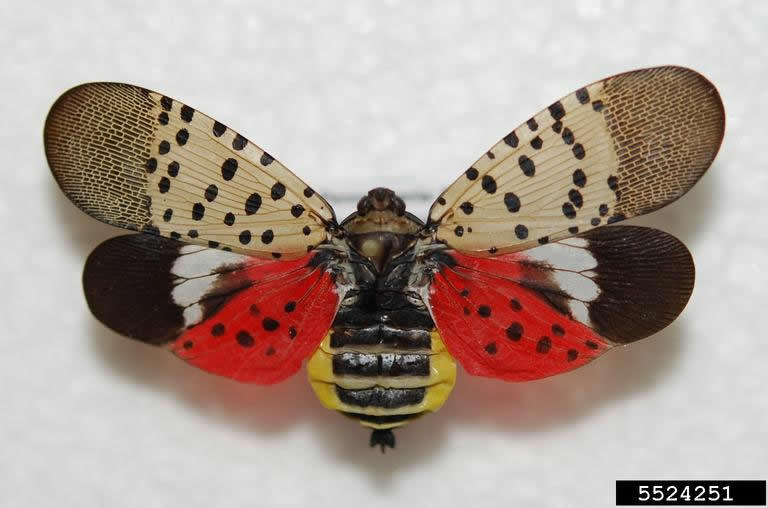
There is an insect called the spotted lanternfly. It's an invasive species here in the United States. And the state Department of Environmental Conservation would like you to report if you see one around here.
DEC reasons blurbage (emphasis added):
SLF pose a significant threat to New York's agricultural and forest health. Adults and nymphs use their sucking mouthparts to feed on the sap of more than 70 plant species. This feeding by sometimes thousands of SLF stresses plants, making them vulnerable to disease and attacks from other insects. SLF also excrete large amounts of sticky "honeydew," which attracts sooty molds that interfere with plant photosynthesis, negatively affecting the growth and fruit yield of plants. New York's annual yield of apples and grapes, with a combined value of $358.4 million, could be impacted if SLF enters New York. The full extent of economic damage this insect could cause is unknown at this time.
Although native insects also secrete honeydew, the size of SLF and the large populations that congregate in an area result in large accumulations of it. The sticky mess and the swarms of insects it attracts can significantly hinder outdoor activities. In Pennsylvania, where SLF populations are the densest, people can't be outside without getting honeydew on their hair, clothes, and other belongings.
Ew. Also: the term "sucking mouthparts."
An end for plastic shopping bags in New York?
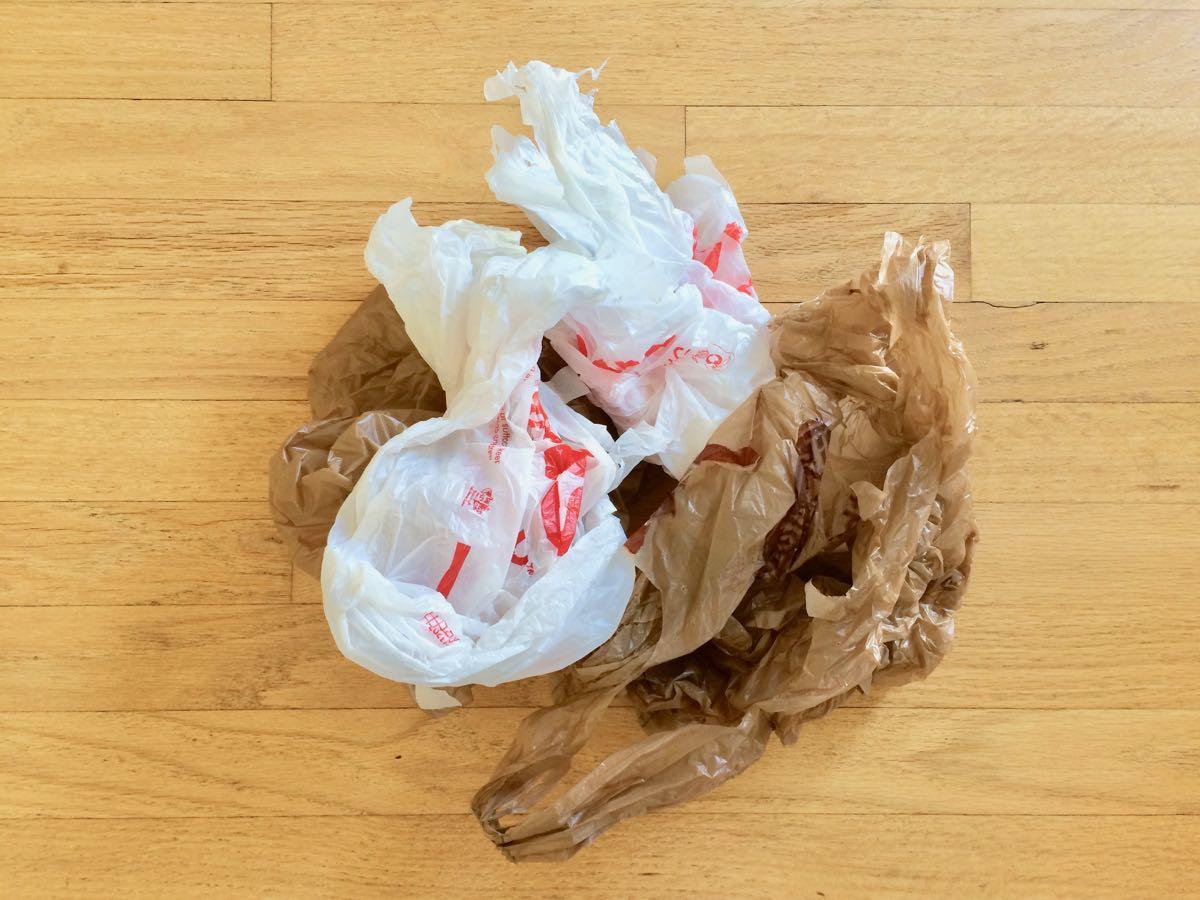
Paper or... reusable?
On Monday the Cuomo admin floated a bill that would ban many kinds of plastic shopping bags starting at the beginning of 2019. Bill language blurbage:
This prohibition does not apply to (i) a reusable bag that is not made of film plastic or a compostable bag; (ii) a plastic bag used solely to contain or wrap uncooked meat, fish, or poultry; (iii) a plastic bag used by a customer solely to package bulk items, such as fruits, vegetables, nuts, grains, or candy; (iv) a plastic bag used solely to contain food sliced to order; (v) a plastic bag used solely to contain a newspaper for delivery to a subscriber; (vi) plastic bags sold in bulk; (vii) a plastic bag prepackaged for sale to a customer including, but not limited to, a trash bag and a food storage bag; (viii) a plastic garment bag; (ix) a plastic bag provided by a restaurant, tavern or similar establishment to carry out or deliver food; or (x) any other bag exempted by the department in regulations.
The bill would also make the state the sole jurisdiction for regulating the use of plastic bags. There are currently a handful of municipalities around the state already with laws on the books. (And the state already requires larger retailer to collect plastic bags for recycling.)
The State Museum coyote is free
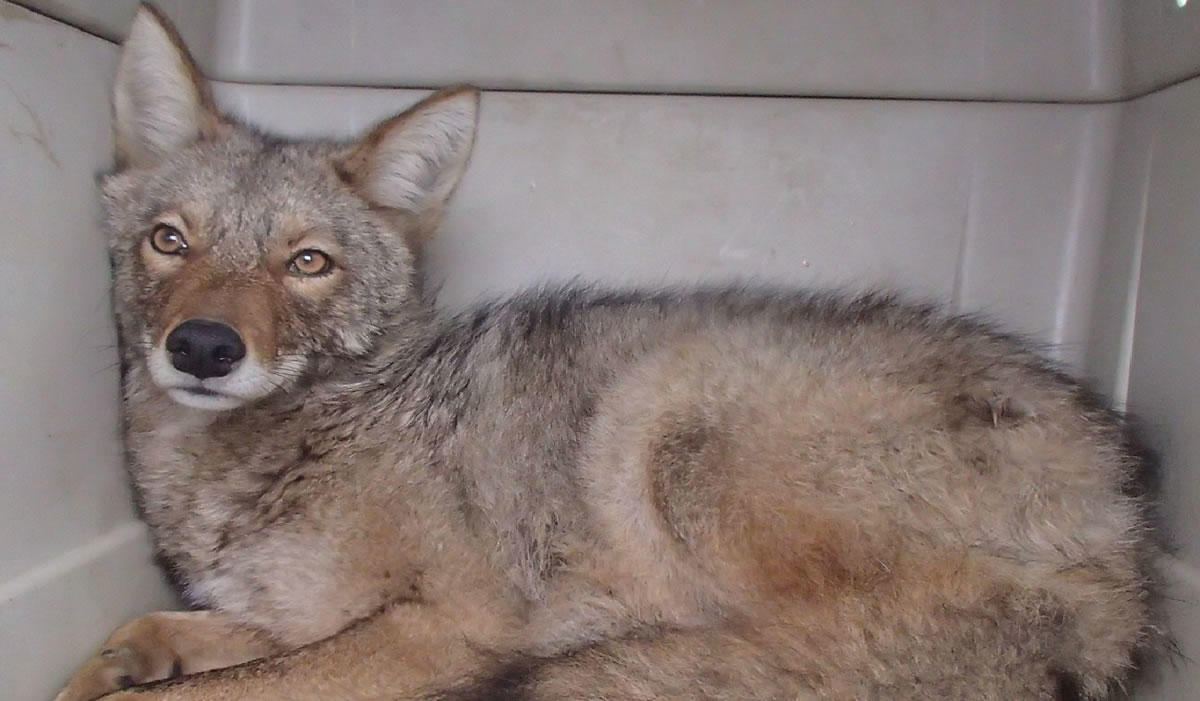
The coyote ahead of its release back into the wild. / photo: NYS DEC
Good news: The state Department of Environment Conservation says the coyote removed from the State Museum terrace Tuesday has been released back into the wild. There's a photo and video from the release below.
DEC says biologists at the agency's Wildlife Health Unit in Delmar checked out the coyote before the release Wednesday morning and concluded the animal was in good health.
As we noted yesterday, it's not all that surprising that a coyote would turn up around the Empire State Plaza -- they slip through urban and suburban areas often. But finding one hanging out in a place like that during the day is odd. So what happened?
There was a coyote at the State Museum
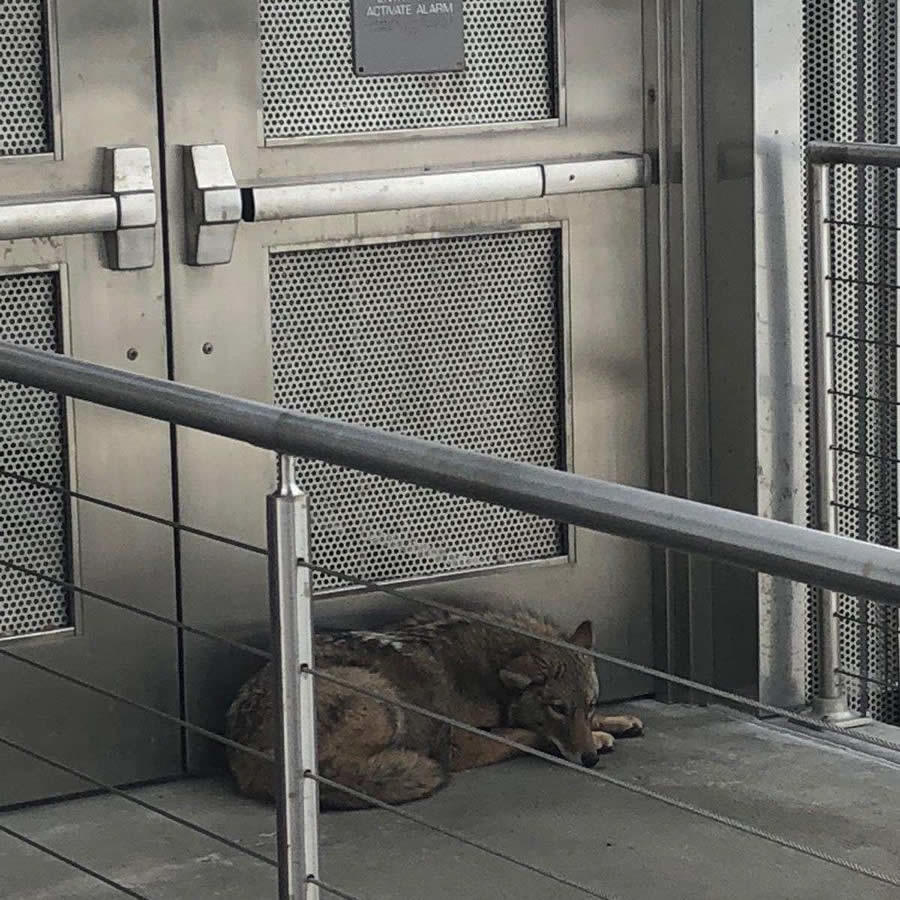
A photo posted by NYS Police on Twitter Tuesday.
A thing that happened Tuesday: A coyote -- an actual, living, wild coyote -- found its way up onto the terrace of the State Museum around noon.
State Police responded, and in turn called in the state Department of Environmental Conservation. DEC said that wildlife technicians tranquilized the coyote and took the animal to the agency's wildlife lab for evaluation. A DEC police lieutenant told the media it's not clear if the coyote was sick, but it had been become trapped and was scared. [@nyspolice] [@NYSDEC] [@bern_hogan]
Let's hope the coyote avoids the usual ending to the wild animal story arc. (RIP, Runaway Bison and Albany Bear.)
Coyotes among us
That a coyote would show up around the State Museum -- or anywhere in Albany -- is actually not that surprising. That it would end being noticed is more so.
Solar Energy for Everyone info event
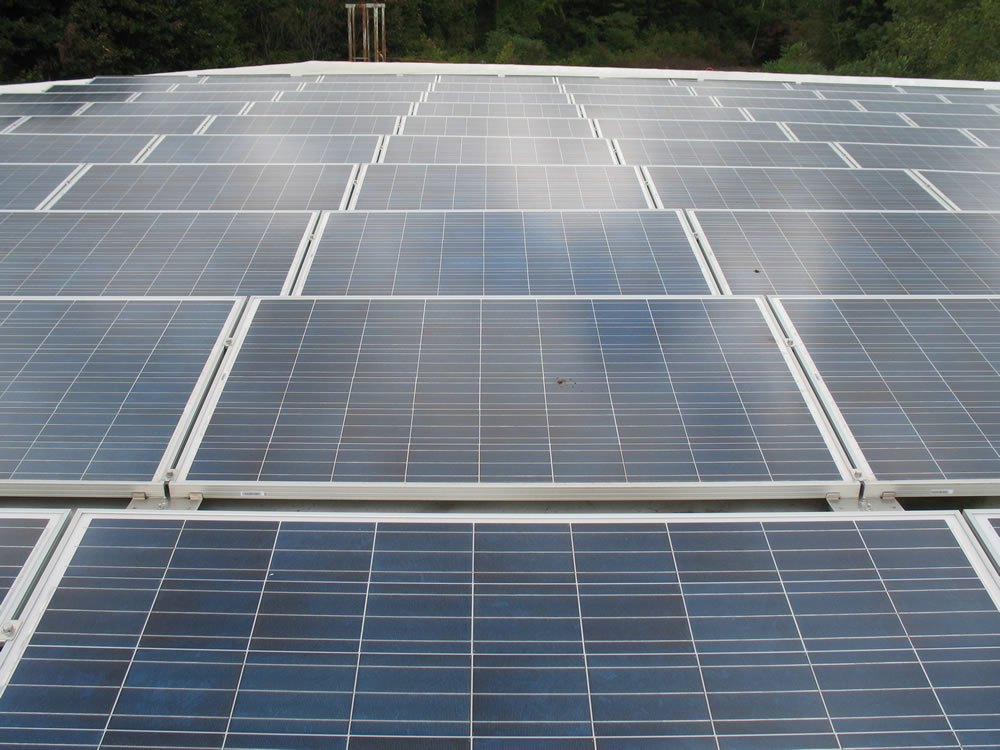
A group of environmental and renewable energy orgs are sponsoring a "Solar Energy for Everyone" event March 28 at East Greenbush Methodist Church. Poster blurbage:
Learn about solar options:
1. Install solar panels on your home, property or business
2. Choose a renewable energy electricity supplier
3. Buy or lease solar panels at a community farm
PowerPoint presentation on Community Solar. High Peaks Solar, Hudson Solar and Monolith Solar will be present to answer questions about their community solar farms and onsite solar installations for NYSEG and National Grid customers. You will be able to sign up for a renewable energy electricity supplier.
The event is Wednesday, March 28 from 6:30-8:30 pm. The East Greenbush Methodist Church is at 1 Gilligan Road.
Getting solar panels for your home could be a lot more affordable than you might think. The price of solar panels has been dropping quickly in recent years. And tax credits from the federal government and New York State can cover more than half the cost. Depending on the circumstances -- size of system, location, electricity usage -- the pay back can be in the 6-7 year range.
If you're thinking about getting solar, it's worth checking in with the Solarize Albany group, which offers information about sorting through options and organizes group buying discounts. Its upcoming 2018 campaign will include a focus on solar for affordable housing.
The return of the blue snowflakes
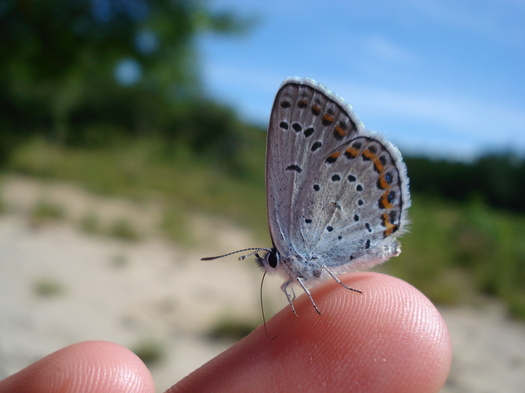
The Albany Pine Bush is an unusual example of an inland pine barrens, and it's one of the few homes to an unusual inhabitant: The tiny, beautiful -- and endangered -- Karner Blue butterfly. And it's making a comeback.
The Albany Pine Bush Preserve Commission announced Thursday that conservation efforts in recent decades have apparently had a big effect on Karner Blue populations in the Pine Bush. In 2007, the preserve was estimated to have fewer than 1,000 of the butterflies. And in 2016: more than 15,000.
Spring is back, and so are ticks (ugh)
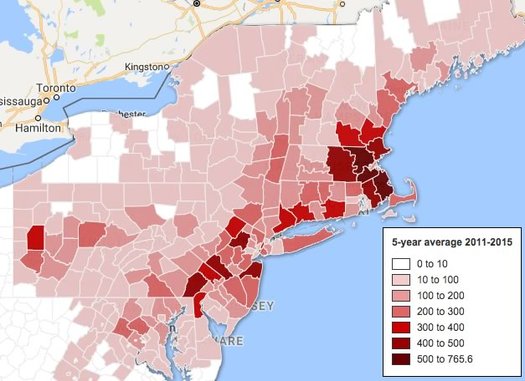
The average annual number of reported Lyme disease cases by county between 2011-2015. (Please see the important notes below about these numbers.)
This part of the country -- the whole Northeast, really -- is a hot spot for Lyme disease. The map* above depicts the average number of Lyme cases** reported in each county each year between 2011-2015 -- the numbers are published by the federal Centers for Disease Control and Prevention.
There's a larger, clickable national map after the jump if you'd like to explore further.
New York is tagged as a "high-incidence state" for Lyme by the CDC -- it had the 13th highest rate of confirmed cases per 100,000 people across the three years 2013-2015. (Vermont had the highest rate, and Massachusetts the fifth.)
Here's info from the state Department of Health of ways to lessen the risk of being bitten by a tick and what to do if you are. (And don't forget about taking precautions for your dog, too!)
Adapting for a more extreme future
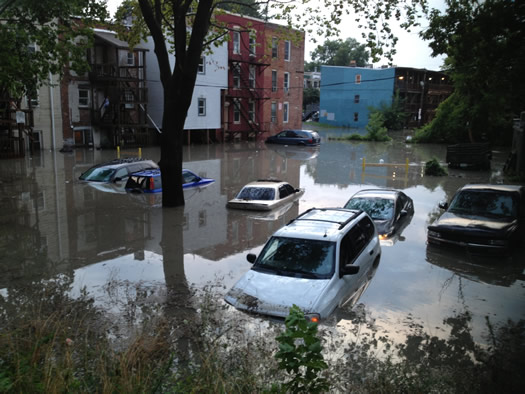
Flash flooding in the city of Albany in 2014 when a storm dropped almost three inches of rain in less than an hour. / photo via Laura (thank you)
The Northeast US is looking at average temperature rises of a few degrees over the next century because of climate change, according to the some of the best estimates. And while an increase of, say, 4 degrees might not sound like much, it's setting up a future in which the extremes are likely to be more extreme and more common: hotter heat waves, bigger rainfall events, more common floods.
Radley Horton, a climate scientist at Columbia University's Center for Climate Systems Research, was at UAlbany this week for a program about extreme events prompted by climate change and their effects on human health.
We got a chance to talk with him for a few minutes about how climate change is already affecting this part of the country, what could be ahead, and how we might adapt.
But if there were mountain lions here...
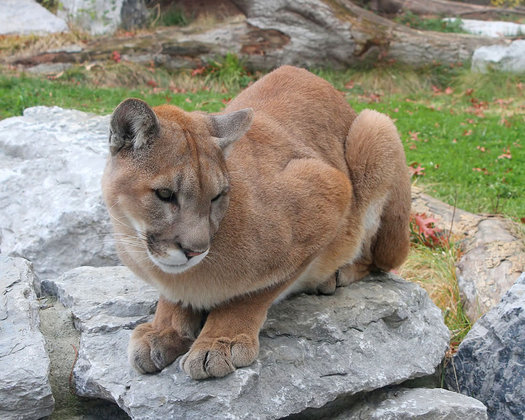
For hire? / photo: Greg Hume (CC BY-SA 3.0) via Wikipedia

An interesting thing about the way the landscape of the Northeast has been changing over the last century is that the amount of forested land has actually increased as many areas that were once cleared for farming have fallen back into being covered by trees.
These new forests aren't exactly like the old forests, though. Among the differences: they lack some of the large predators of the past -- notably cougars/mountain lions and wolves. That might not seem like a big deal for humans -- it might even seem like a good thing, considering those sorts of animals can be a bit fear inducing. But one of the side effects is that deer now lack a natural predator, and their populations have exploded.
There are so many deer. And they cause all sorts of problems -- from car crashes, to disease transmission, to habitat destruction, to grazing on gardens.
So. If we could get some of these predators back in this area -- mountain lions, specifically -- what might that be worth?
A peek at our possible future climate
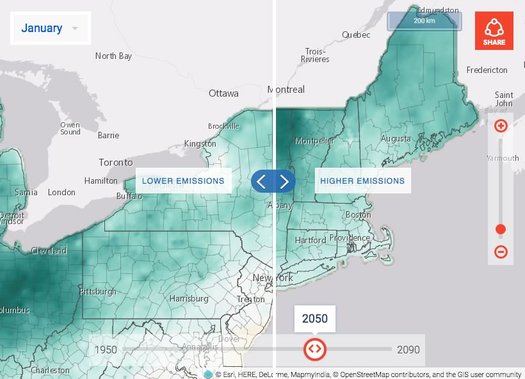
A screengrab of the Climate Explorer map that allows you see projected rainfall change under two different emissions scenarios. This map is showing projected rainfall for the Northeast January in 2050. (The deeper the green, the larger the project rainfall increase from the 1960-1989 normal.)
We've had an unusually dry summer so far, and it's been somewhat hotter than usual, too. And while any one year isn't necessarily a sign of some broader trend, this summer is in some ways an example of what the future summers here might be like because of climate change.
We were thinking about that today while looking around the federal government's new Climate Explorer website. It takes projections based on climate change models and greenhouse gas emission scenarios and makes them easy to map and graph for locations around the country. For example: Here's the page for Albany County.
So, what sort of future are the models pointing toward for our area?
What, your job doesn't involve baby bears?
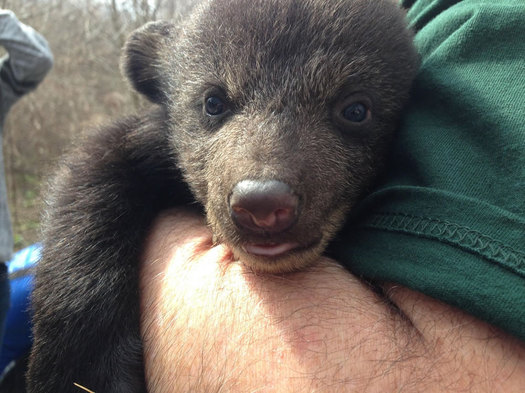
Oh, hello, there...
Filed under "jobs we didn't know existed" and "the cuteness is too much": Biologists with the state Department of Environmental Conservation have been visiting bear dens around the state to gather data about bear populations in New York. And that process involves (temporarily) removing bear cubs from the dens so they can be weighed.
This week the DEC posted photos from one of these recent den visits -- in Allegany State Park -- on its Facebook page. That's one of the pics above. A clip from the post:
The 173-pound sow was ear-tagged and fitted with a GPS tracking system collar. The collar collects GPS points at set intervals, then sends the location via text messages - so even bears are getting in on texting these days! DEC staff carefully monitored the sow's vitals during the process. The bandana is used to protect her eyes while she is immobilized.
During this time, the three cubs were ear-tagged and weighed only. There were 2 males and 1 female bear cub. The cubs were fairly small (3-4 pounds each) and healthy, probably meaning they were born in late January. After the work was done, the sow is placed back in the bear den with her cubs, where they will stay until the cubs are big enough to keep up with their mother in the woods, typically another few weeks.
DEC says it will be sharing more from these bear den visits over the next week.
Black bear populations in New York State have "increase[d] dramatically in number and distribution in recent decades," according to state's Black Bear Management Plan published in 2014 -- and there are now more than 6,000 bears estimated to be in the state, across large portions of upstate.
Earlier on AOA:
+ Don't feed the bears
+ There's a moose... and there's a moose... and there's a moose...
photo: NYS DEC
Signs of a comeback for one of the Hudson River's iconic species
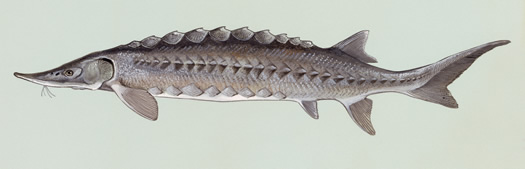
illustration: Duane Raver/U.S. Fish and Wildlife Service via Wikipedia

The Atlantic sturgeon is an iconic species for the Hudson River -- it's the fish depicted in the logo for the river's estuary, it was once a favorite food in this area known as "Albany beef," and they can grow up to 8-feet-long. The last century has been rough on the species, though -- the population has declined significantly the fish are now considered endangered.
But the state Department of Environmental Conservation reports this week that there are indications that Atlantic sturgeon populations are rebounding. DEC says a survey of the Hudson River last year found the highest numbers of sturgeon in the survey's 10-year history -- and there appears to be an overall upward trend.
Said acting DEC commissioner Basil Seggos in a press release: "We are cautiously optimistic that, with our continued vigilance and efforts to protect this species, Atlantic sturgeon will have a secure future."
The decline of Atlantic sturgeon populations prompted a 1998 moratorium on fishing them along the East Coast. And that ban could last until the late 2030s because sturgeon can live as long as 60 years, and don't reach maturity until 11-21 years old.
As David Strayer, a freshwater ecologist at the Cary Institute of Ecosystem Studies in Millbrook, explained to us last year:
"Fisheries biologists talk about [the overfishing of Atlantic sturgeon] like clear cutting, which I think is an apt analogy. You wouldn't think you could go into a wood lot and cut all the trees every five minutes and expect there to be a forest there any longer. Everybody understands it takes so many years for a baby tree to grow up. It's the same way with the sturgeons. When we started fishing them real hard it was like someone went into the woods and cut all the trees."
And now it appears the forest of fish is starting to slowly grow back.
Earlier on AOA: Odd and notable creatures of the Hudson River
Revisiting the reservoir goats
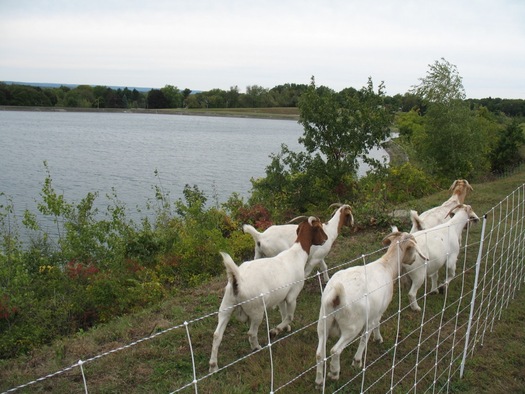
A month ago the Albany Water Board announced it had hired (so to speak) five goats to clear a brush-covered section of the land around the city of Albany's Loudonville Reservoir.
A strip along the eastern edge of the reservoir had become choked with a tangle of trees, bushes, and vines -- and the slope of the land made it hard to work on, especially since debris would have to be kept out of the reservoir. Apparently it was difficult enough that the water board had trouble finding a contractor willing to take on the tricky task.
Enter the five goats from Heather Ridge Farm as a sort of test of the concept of goatscaping.
So, how'd that turn out?
Reservoir goats
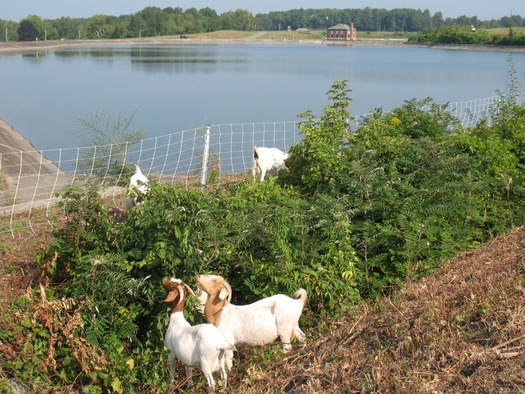
They're working.
It can be hard to hire a contractor. Sorting through all the various options. Coordinating calls and appointments for estimates. Trying to pick the best person.
And what if, as the Albany Water Board recently decided, the best person for the job is... a goat?
Seeing the city for the trees
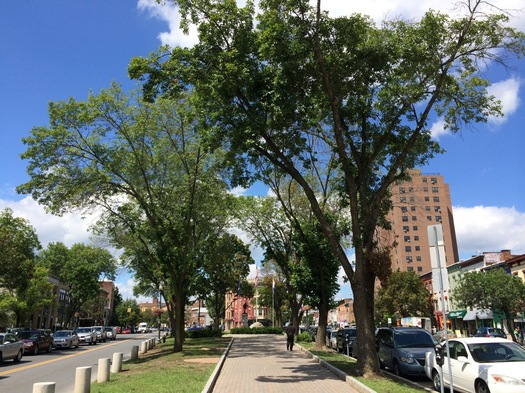
Albany's city forester says the ash trees in Townsend Park will probably have to be taken down.
Trees are often one of those things you don't really have a real sense of until they're gone. It's remarkable how much emptier, starker, hotter a street can feel after a few longstanding trees are taken down.
The city of Albany is facing the possibility of experiencing this sort of impact on a large scale. Last year an invasive beetle was detected in the city for the first time and the city's ash trees -- of which there more than 2,000 along the city's streets and in its parks -- are threatened with being killed off.
We talked with Albany's city forester, Tom Pfeiffer, recently about dealing with this threat, the problems associated with uniformity, trees that stink, and trees as infrastructure.
A future with less heating, more air conditioning
Can you imagine a New York with temperatures that are more like... Oklahoma?
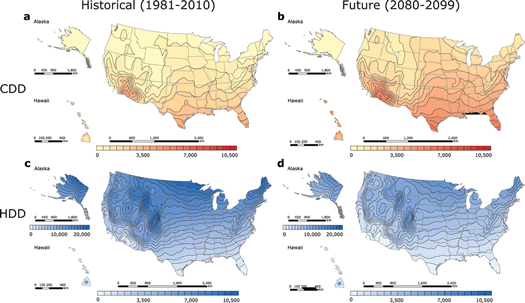
That's one of the comparisons made in a paper published today in Scientific Reports that aims to project how global warming will affect the heating and cooling needs of areas around the United States.
Using a climate scenario that expects global mean surface temperatures to rise by more than 4 degrees Fahrenheit, two Stanford researchers projected how the current "normal" annual number of heating and cooling degree days across the US would compare to levels at the end of this century.
(You can think of heating and cooling degree days as a measure of how much heating or cooling a building needs in a place over a time period.)
Here's a clip from the paper about projections for New York City:
The historical CDD [cooling degree day] value of New York City (1,105 CDD) is projected to increase by the end of the century (2,348 CDD), approaching a CDD value that historically prevailed in the hot desert climate of El Paso, TX (2,331 CDD). The historical HDD [heating degree day] value (4,750 HDD) in New York City is projected to decrease (3,126 HDD) to approximately the number of HDD in present Raleigh, NC (3,246 HDD). New York City's historical degree-day sum (5,855 HDD + CDD) will decrease (5,474 HDD + CDD), resembling the historical degree-day sum in Oklahoma City, OK (5,463 HDD + CDD).
The researchers used numbers for current normals from more than 7,000 weather stations around the country, so they were able to make maps based on the projections. One of them -- showing projected differences in cooling and heating degree days across the country -- is above.
A bigger map, which we think illustrates things a bit better, is after the jump. And it illustrates that the Albany area is, of course, not exactly like New York City. But the general trend is projected to be about the same -- fewer heating degree days, and a lot more cooling degree days.
Oh, hey, another seal in the Hudson River
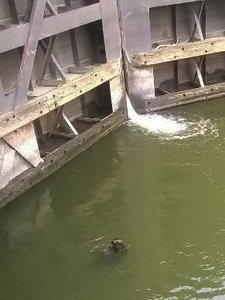 Speaking of unusual Hudson River creatures... the state Canal Corporation reported today that a seal -- yep, a seal -- made its way through the lock at the Federal Dam in Troy this weekend. From the Canal Corp's FB posting (link added):
We had a special visitor at Lock C-1 (Halfmoon) over the weekend! A seal swam up the Hudson River and locked through the federal lock at Troy before visiting us on the Champlain Canal. Thank you The Riverhead Foundation for Marine Research and Preservation for your guidance as we worked to keep the seal safe.
That photo is also from the Canal Corp's FB posting.
As it happens, it's not really all that usual to see a seal in the Hudson River around Albany. A seal -- or maybe multiple seals -- have been popping up around Coxsackie the last few years. As you know, the Hudson is open to the ocean at its southern end, and the thought is that seals end up here after after following food up river.
(Thanks, Duncan!)
Earlier on AOA:
+ Odd and notable creatures of the Hudson River
+ That time whales swam to Albany
Three environmental issues facing the Hudson River
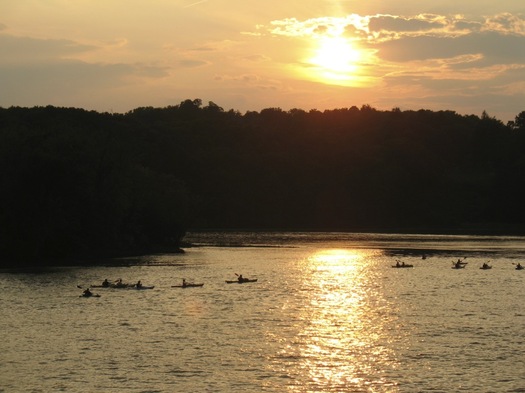
Ahead of the Rail, River, Hudson II tour this coming weekend, we have a series of posts focusing on the Hudson River this week.
As much as the Hudson River has been revered and treasured by people over the years for its beauty and key role in our communities, it's also suffered its share of adverse impacts during that history.
Here's an overview of three significant concerns that environmental orgs flagged about the Hudson River right now.
River Week is sponsored by: Albany County Convention and Visitors Bureau, Downtown Albany BID, Dutch Apple Cruises, Harmony Mills, Hudson River Greenway, Nine Pin Cider, Sweet Sue's, and Downtown Troy BID.


Solar continues to grow around New York
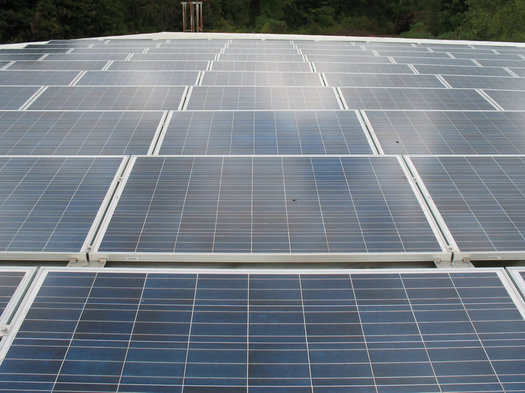
More common.
The Capital Region had the second-highest amount of installed solar energy generation capacity in the state as of 2014, according to numbers released by the Cuomo admin Monday. The eight-county region had 51 megawatts of capacity -- up 500 percent since 2011. (The region with the highest total was Long Island, with 96 megawatts.)
For some perspective, a megawatt of installed solar is estimated to be capable of powering about 155 homes a year in New York State.
New York State has a whole had almost 315 megawatts of installed solar capacity as of 2014, according the Cuomo admin. That's up 300 percent since 2011.
A few individual Capital Region counties also ranked highly. Albany County had 13.66 megawatts of installed capacity -- the fifth-highest total among all counties. And Columbia County ranked #1 for installed capacity per capita.
Are there clickable maps? You know there are...
Some number of facts about the Normanskill
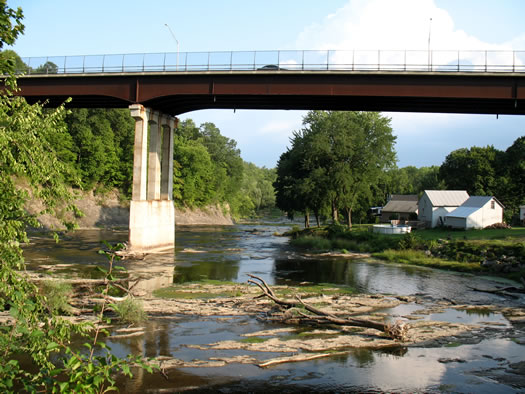
It's a long running thread through this area.
With the Normanskill in the news this week, we thought it'd be interesting to look into the stream's course through this area -- both in geography and history. We started with the intent of digging up one fact or bit for each mile of the Normanskill -- but, frankly, we lost count.
So here is an undetermined number of facts or bits about the Normanskill.
Short commute, small footprint
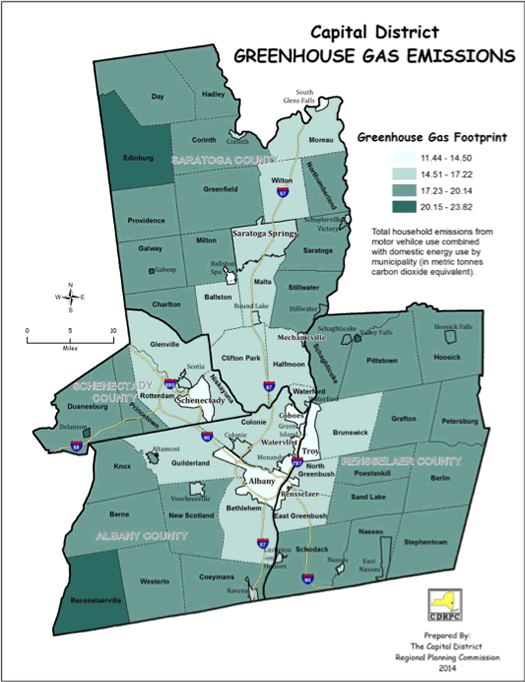
Among the benefits to living near the Capital Region's urban core: on average, your household probably will have a lower greenhouse gas footprint.
The above map caught our eye while we were flipping through the docs for that Capital District Transportation Committee draft plan for the area's transportation future. It depicts the estimated average greenhouse gas footprint -- for both transportation and household use -- for households in each municipality. (After the jump, we've also clipped the map that depicts estimated greenhouse gas footprints just for transportation.)
The map is probably what you'd expect -- if a municipality, like the city of Albany, hosts a lot of jobs then its residents are more likely to not have to commute far, and as a result, won't have as large a greenhouse gas footprint. (And you'd probably expect the inverse, too.) In fact, that map matches up pretty well with maps for both daytime population swing and average commute time in the region.
We were curious about the estimates behind the map, so we dug out a Capital District Regional Planning
Commission report about a regional greenhouse gas inventory. The estimates are explained on p. 19. And the report also includes more, and larger, maps on the topic.
One highlight from those additional maps: An estimate of energy costs by municipality (p. 23). The difference between the low and high end is about $8,500 per year.
Fracking to be banned in New York
The Cuomo's administration's long-awaited decision on whether to allow hydrofracking in the state arrived today during a cabinet meeting -- and it will move to formally ban the method of extracting natural gas from the earth. [NYT]
The decision was pegged to the long-delayed state Department of Health study of the issue. A key clip from Capitol Confidential:
While [acting state health commissioner Howard] Zucker took pains to point out that the data on long-term impacts of hydrofracking is not fully conclusive, he turned personal in his decision.
"Would I live in a community with HVHF (high-volume hydraulic fracturing) based on the facts I have now?" Zucker said. "Would I let my child play in the school field nearby, or my family drink the water from the tap or grow their vegetables in the soil? After looking at a plethora of reports ... my answer is no."
Allowing fracking had been pitched as potential economic development for the Southern Tier, which sits atop natural gas deposits in the Marcellus Shale formation. Pennsylvania allows fracking, and a large swath of the state has natural gas wells now. The Southern Tier has some of the highest unemploymen rates in the state. [NPR State Impact]
But fracking also appears to involve some significant environmental risks, especially for ground water, and environmentalists and other advocacy groups have been pushing hard on the Cuomo admin over the last few years to not allow fracking.
Where the wild things aren't... yet
A mountain lion (cougar) in a zoo. / photo: Greg Hume (CC BY-SA 3.0) via Wikipedia
The reported mountain lion sightings near Cambridge in Washington County recently is a familiar story. [Post-Star]
Mountain lions!? Here!? In 2011 The US Fish and Wildlife Service declared that the eastern cougar had likely been extinct since the 1930s. Even so, there have been people -- naturalists, hikers, people drinking coffee on their decks -- who say they've seen one of the big cats in the eastern US since then. And the rather wayward journey of one of the cats through New York and into Connecticut a few years back just stoked those rumors.
After covering this topic a bunch of years ago for another outlet, we've thought this was one of those fun mysteries -- the kind of thing people hoped was true. That maybe our part of the world was a little more wild than we all thought.
Many parts of the Northeast have been going through an interesting environmental change over the last century in that they've actually been gaining forest land as former farmland falls back into being forested. As it happens, these once-again-spreading forests aren't exactly like the Northeastern forests of centuries ago -- the mix of trees is probably different. And they lack many of the big predators that disappeared through hunting and habitat loss. Or, at least, they have lacked those predators -- because that could be changing. [Science Daily]
Capital Region composting services
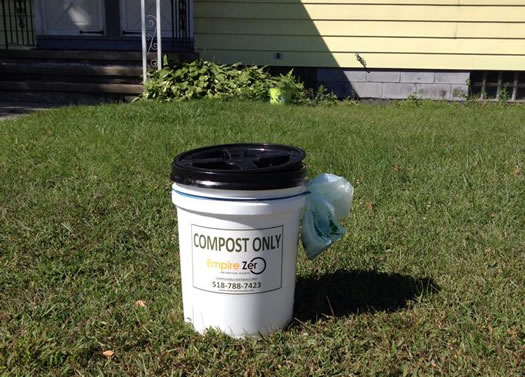
Composting might sound a little odd -- separating stuff like food scraps from your trash so it can be decomposed -- but think of it this way: Composting is like recycling, but for organic trash. And just like a used bottle can be recycled into something different, your leftovers from dinner can also be transformed into something new and productive.
Here's a quick look at four local services that are aiming to make composting a regular household practice, and help you do the environment a favor.
A future of more extremes
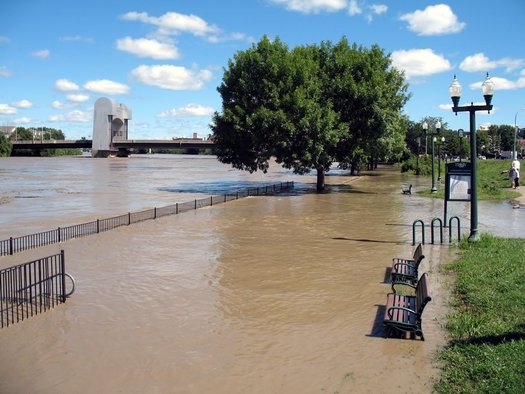
Very heavy precipitation events -- like Hurricane Irene in 2011, which flooded many areas of the region -- are becoming more common in the Northeast, according to the National Climate Assessment.
Unusually large rainfall events that result in flooding. Early spring that results in fruit tree blossoms getting zapped by frost. Exceptionally hot days in places where people haven't typically used much air conditioning.
Those are a few examples of events that are projected to become more common in the Northeast due to climate change, according to a report out today called the National Climate Assessment. It's the product of a federally-organized effort to "understand, assess, predict, and respond to human-induced and natural processes of global change."
The report looks at the whole country, but it also breaks down what's happened already -- and what's predicted to happen -- regionally. So, let's take a look at some of the bits for the Northeast...
New York State highlights proposed crude oil train safety upgrades (updated)
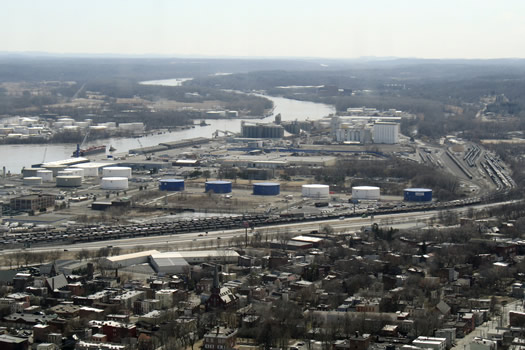
The Port of Albany
See update at the end about Global Partner's announcement that it will require a newer model of tanker car.
The Cuomo admin released its report today reviewing how the shipment of crude oil on trains through the state could be made safer. As you know, the Port of Albany has become a major transfer point in the distribution of crude oil from North Dakota. And, because of a string of accidents -- such as a catastrophic explosion in Quebec last year -- the issue has gotten a lot of attention locally.
The first few parts of the state's report are a pretty good backgrounder on the issue. It includes a bunch of facts detailing the rapid rise in US production of crude oil, and how that's resulted in trains loaded with crude traveling through the state. (It's also worth keeping in mind that it's a state-authored doc.)
The report also highlights a number of things the state would like to see changed. And top of the list is an improvement in the tanker cars used to transport the oil -- because the tanker cars aren't very good at it. Or, as the report describes them, they're "inadequate." A clip:
2013 was a good year for New York State bears. Well, it was for some of them.
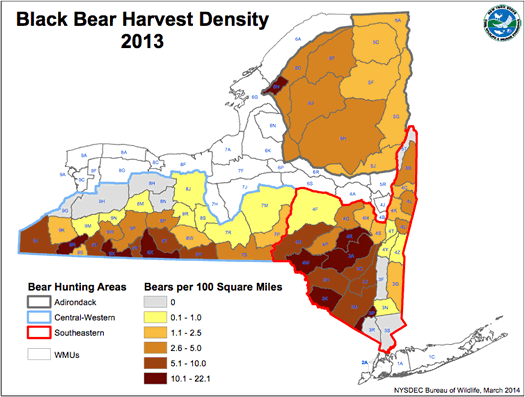
The good news, if you're a bear: The darker shaded parts of the state above probably are good habitat. The bad news, bears: Those are also the places hunters are looking to shoot you.
Hunters in New York State killed the second-highest number of bears on record in 2013, according to the state Department of Environmental Conservation. The total: 1,358.
The DEC released its "bear harvest" summary for 2013 today -- it's basically a recap of where hunters killed bears last year. A few bits:
+ The number of bears killed by hunters in the state has been trending upward over the last two decades. The average number killed from 1991-2000 was 722. Since 2001, it's been 1182 per year.
+ Hunters killed 35 bears in the Capital Region's core counties last year (Albany: 7, Rensselaer: 14, Saratoga: 14). That's up from 30 in 2012, and 26 in 2011.
+ DEC says the higher number of bears killed by hunters "reflect that bear populations have increased over the past decade." Apparently food for bears was abundant last year.And New York has "excellent bear habitat," according to a statement by DEC commissioner Joe Martens in the press release today.
+ The state has been opening more areas for bear hunting over the last decade -- including a large stretch of the area east of the Hudson from Westchester up through Washington counties in 2011. DEC says it's currently considering a plan to open all of upstate to bear hunting.
map: NYS DEC
Trying to avoid the aporkalypse in New York
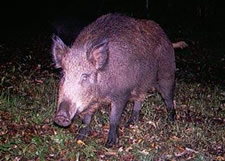 Over at the Watershed Post, Lissa Harris has an interesting article about the simmering wild boar problem in New York State -- and the escalating efforts to keep it contained:
[I]t might not be too late for New York, according to the handful of state and federal regulators whose task it is to try to keep feral swine from getting established in the Empire State.
From Jan. 28 through Feb. 7, a helicopter crew from the U.S. Department of Agriculture (USDA) is surveying several areas known to be home to feral swine, including part of Delaware and Sullivan counties. If they spot any feral pigs on land they are surveying, and if the landowner has already given them permission, they will shoot the animals from the air.
Kelly Stang, wildlife biologist for the New York State Department of Conservation (DEC), said that to her knowledge, it's the first time in New York State history that government officials have set out to hunt animals by helicopter. But the USDA crew has flown similar missions all across the East Coast.
The main purpose of the helicopter flights is not to hunt the hogs, but to find out more about the wily animals and their movements across the landscape. With trees bare and snow on the ground, torn-up ruts in the earth left by foraging swine should be easier to spot.
"The crew that's doing it, all they do is aerial operations," Stang said. "The main goal is to survey -- to see if we can find any from the air, where are they, how many. If they do have the opportunity to shoot them, they will take that shot."
Most of the feral pigs in New York are Eurasian boars brought here to be hunted. It's now illegal to bring them into the state or breed them. And in 2015 it will be"illegal to possess, sell, distribute, trade or transport Eurasian boars in New York."
Feral pigs are causing significant problems in other states -- especially in Texas, which has apparently been fighting a losing battle in the "aporkalypse." A few years back it was estimated that wild pigs were causing $400 million in damages annually.
Earlier on AOA: Wanted, dead or live: feral pigs
photo: NYS DEC
Why Albany is playing a major role in the transportation of oil, and why that concerns some people
The Port of Albany.
There's been a lot attention recently on the Port of Albany's growing role in the shipment of crude of oil -- and the potential dangers involved. More specifically, a company has proposed building a new facility at the port that could potentially open the way for a different type of oil to be shipped through the port, and that's raised some questions.
If you haven't been following this issue -- and we don't really know why you're not thoroughly caught up on petroleum product distribution systems -- here's a Q&A-style breakdown of some of the issues involved -- and why people are concerned.
Carbon footprints, by ZIP
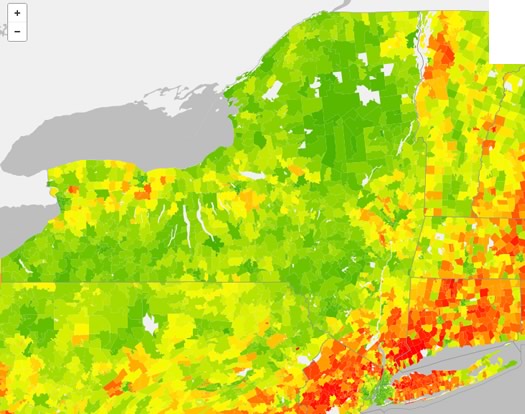
The greener the ZIP, the lighter the carbon footprint.
Check it out: The map above depicts the estimated average annual household carbon footprint in New York State, by ZIP code. It's from the UC Berkeley CoolClimate Network, and is based on data from the network's "CoolClimate Carbon Footprint Calculator."
If you head over that first link, you can use a clickable version of the map, along with two other maps for household energy carbon footprint and transportation carbon footprint.
Poking around the Capital Region, it's kind of what you might expect: the more urban areas of the Capital Region tend to score lower carbon footprints than the suburban areas. One of the main reasons? Transportation.
Here's an example, from the calculator (second link above): The ZIP codes 12203 (mostly the city of Albany) and 12065 (Clifton Park) are tagged as having roughly similar estimated household carbon footprints for home, food, goods, and services. But there's a relatively large gap for transportation -- specifically car fuel. As a result, 12203 is pegged at 41 tons of C02 per year and 12065 at 49.5.
Here's an FAQ about the methodology.
New York State
The thing that really jumped out to us in all this wasn't the Capital Region, but New York State itself. The Empire State stands out on all three national maps, especially the household energy carbon footprint.
One reason: New York State uses very little coal to generate electricity. That's important because electricity from coal has a big carbon footprint. The state's three biggest sources of electricity (in descending order): natural gas, nuclear, hydroelectric.
Also helping: New York State had the second lowest energy consumption per person (as of 2010), according to the US Energy Information Administration (that link just above). The EIA notes New York's ranking was "due in part to its widely used mass transportation systems" (mostly in the NYC area, of course).
[via @AndyArthur]
map source: UC Berkeley CoolClimate Network Average Annual Household Carbon Footprint (2013)
Earlier on AOA: Charting the Capital Region's workday population tide
Gobble, gobble, gobble
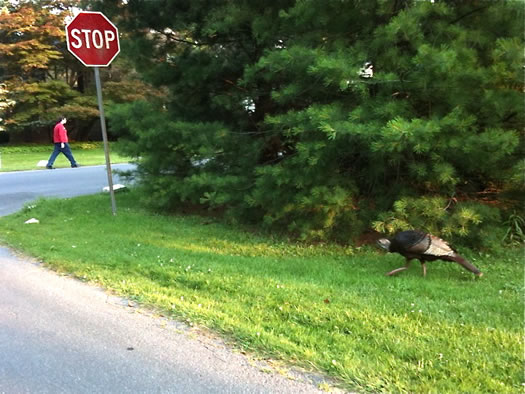
A wild turkey in Albany's Buckingham pond neighborhood in summer 2012.
The state Department of Environmental Conservation says wild turkey populations have declined in many parts of the state over the last decade. In an effort to figure out why, DEC is planning to capture some hens to fit them with ID bands -- and in some cases, satellite radio-transmitters. DEC is also asking the public to report wild turkey sightings via a survey.
It's estimated that the wild turkey population in New York State could be as large as 300,000. And it's not uncommon to see them around the Capital Region -- we've seen them a bunch of times in residential neighborhoods in the city of Albany. But turkey's weren't always so common here -- at least, at one time. From a DEC backgrounder on wild turkeys:
The wild turkey is native to North America. Turkeys were widespread when the Europeans arrived and may have predated the earliest human inhabitants. At the time of European colonization, wild turkeys occupied all of what is currently New York State south of the Adirondacks.
Turkey habitat was lost when forests were cut for timber and turned into small farms. The early settlers and farmers also killed wild turkeys for food all year round, since there were no regulated hunting seasons at that time. The last of the original wild turkeys disappeared from New York in the mid-1840's. By 1850, about 63 percent of the land in New York was being farmed. This trend continued until the late 1800s when about 75 percent of New York State was cleared land.
In the early 1900s farming began to decline. Old farm fields, beginning with those on the infertile hilltops, gradually reverted to brush land and then grew into woodland. By the late 1940s, much of the southern tier of New York was again capable of supporting turkeys. Around 1948, wild turkeys from a small remnant population in northern Pennsylvania crossed the border into western New York. These were the first birds in the state after an absence of 100 years.
The state's wild turkeys are descendants of those migrants from Pennsylvania.
In studying what's up with wild turkeys, the DEC shouldn't rule out that the birds have just decided to go back to school (you know, because of the economy). Back in September a turkey expressed interest in attending Mater Christi in Albany.
Earlier on AOA: Wild about turkeys
A master plan for Thacher State Park
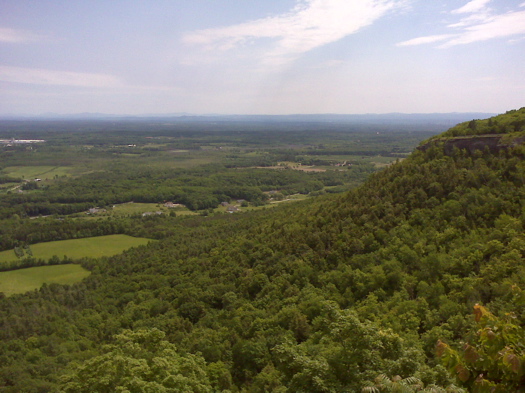
"This magnificent panorama has no parallel in the capital district."
The Cuomo admin released the final master plan for John Boyd Thacher and Thompson's Lake State Parks this week. The plan, which follows a draft plan from earlier this year, is like a road map for the future direction of the parks, identifying new uses and facility upgrades along with a general sense of how those developments are prioritized.
A quick scan of the highlights are after the jump. They include: a merger of the two parks, a redesigned main park area, rock climbing, cave access, mountain biking, expanded beach area, and new bathrooms.
Hudson River rise
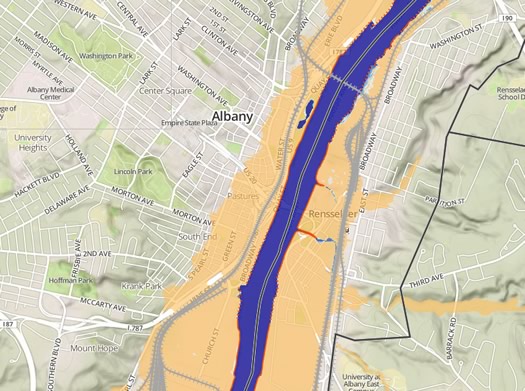
The areas shaded in tan are "100 year floodplains and low-lying areas" after a sea level rise of 6 feet.
After seeing this National Geographic continent-level map based on projections of sea level rise from melting ice, we were curious how rises in sea level could affect the Hudson Valley.
Wait, the Hudson Valley? Yep, it's tidal all the way up to the Federal Dam at Troy. From a Scenic Hudson report (link added):
Over the past century, sea level on the Hudson has risen about a foot--more precisely about 3.2mm per year--a rate greater than the global average. The best data available indicates that we can expect the Hudson's water levels to continue rising up to six feet by the end of this century, and perhaps that much again during the next century.
To help people get a better understanding on the implications of the rising water levels, Scenic Hudson has posted an interactive "Sea Level Rise Mapper." It's good -- it allows you to zoom in on a specific area to see what areas will be threatened, along with projected numbers for affected acreage and households, for the Hudson Valley from just north of NYC all the way up to Troy.
The short story for this area, based on the Scenic Hudson map: Even with a six-foot rise in sea level, many parts of this area along the river would still be protected from permanent inundation (though those low-lying areas of East Greenbush and Schodack along the train tracks get swallowed up). But the area in potential danger during a large flooding event would increase, covering significant portions of Green Island, Troy, Watervliet, Rensselaer, and downtown Albany.
[via Buzzfeed]
Politics Recent argument from Bruce Gyory, a political consultant here in Albany and adjunct professor of political science at SUNY Albany: Climate change will become "the fundamental factor realigning American politics." [City & State]
Earlier on AOA: Photos of Irene flooding in Troy
map: Scenic Hudson
Gillibrand requests federal designation for the Pine Bush
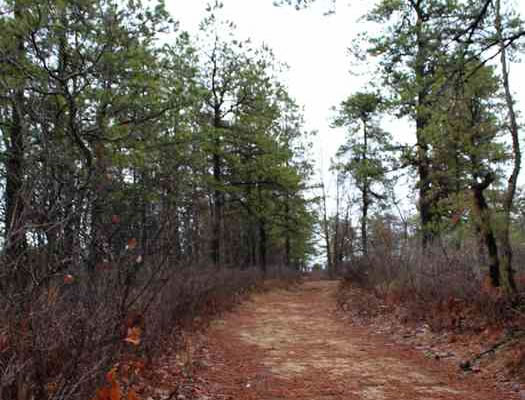
Kirsten Gillibrand's office announced today that the Senator is asking the US Secretary of the Interior to designate the Albany Pine Bush Preserve as a National Natural Landmark. From the letter KG's office released:
The Albany Pine Bush Preserve is a unique ecosystem located on a 3,200-acre site in Albany County, New York. The preserve is one of the best-remaining examples of an inland pine barren habitat. The open areas and well-drained sandy soils of the preserve support a globally-rare pitch pine-scrub oak community and is home to more than 1,300 species of plants, 156 species of birds, 20 species of amphibians and reptiles, and 30 species of mammals, as well as rare species of butterflies and moths. Among its diverse flora and fauna, the Albany Pine Bush supports the federally-listed endangered Karner blue butterfly, as well as the rare inland barrens buckmoth. The Albany Pine Bush is the site of one of thirteen Federal Recovery Units working to rebuild adult populations and restore suitable habitat for the Karner blue butterfly across the range of the endangered species.
The term "National Natural Landmark" sounds kind of impressive -- and the National Park Service website says "NNLs are the best remaining examples of a type of feature in the country and sometimes in the world." But we get the impression it's a largely symbolic. The designation doesn't change ownership of the landmark, nor does it impose any land use restrictions, according to an FAQ about the program posted by the National Park Service. It's largely a voluntary commitment by the landowner to preserve the landmark. (The Albany Pine Bush Preserve is a state preserve.)
If anything, the National Natural Landmark designation is another sign that people's perception of the place continues to evolve, to the ecosystem's benefit. The last couple of hundred years haven't been kind to the Pine Bush. It suffered from a rather poor reputation in the 19th century. The Thruway and Washington Ave Extension were plowed through it. A mall was built. A landfill sited in it. It's only in the last four decades or so that momentum has shifted in the direction of preservation.
The Pine Bush once covered an area of about 40 square miles -- it's now about 1/8 that size.
There are 596 National Natural Landmarks in the US and its territories -- and 27 sites designated as National Natural Landmarks located at least partially within New York State, according to the National Park Service. The list includes two in the immediate Capital Region: Bear Swamp in Albany County, and Petrified Gardens in Saratoga County.
Earlier on AOA:
+ The Karner Blue and Nabokov
+ Why the Albany Pine Bush is sandy
+ The Rapp Road Community Historic District
The closest darkest place
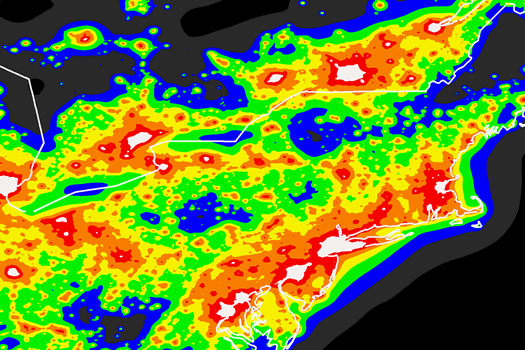
It's that gray spot floating the pool of blue in the Adirondacks.
After reading this interview with Paul Bogard, author of The End of Night: Searching for Natural Darkness in an Age of Artificial Light, we were curious the closest, darkest place. We'll get to that in a second. First, a clip from the interview:
There's a statistic that I quote, which is that eight of every ten kids born in the United States today will never experience a sky dark enough to see the Milky Way. The Milky Way becomes visible at 3 or 4 on the Bortle scale. That's not even down to a 1. One is pretty stringent. I've been in some really dark places that might not have qualified as a 1, just because there was a glow of a city way off in the distance, on the horizon. You can't have any signs of artificial light to qualify as a Bortle Class 1.
A Bortle Class 1 is so dark that it's bright. That's the great thing--the darker it gets, if it's clear, the brighter the night is. That's something we never see either, because it's so artificially bright in all the places we live. We never see the natural light of the night sky.
As Bogard mentions in that clip, there's a scale for night sky brightness, the Bortle scale. Nowhere east of the Mississippi qualifies for the very darkest category.
But we're not too far from a few spots that qualify as pretty darn dark (a scientific term). According to maps created by The World Atlas of the Artificial Night Sky Brightness based on satellite data, there's a patch in the middle of the Adirondacks that qualifies for the second-darkest category on the scale used by the atlas -- here's a zoomable map. Specifically, the patch is just west of Blue Mountain Lake, around Raquette Lake. It's about 135 miles from Albany.
It's not surprising the Adirondacks have a spot like this -- it's one of the least-lit places in the eastern United States.
image: The World Atlas of the Artificial Night Sky Brightness
More Lyme disease -- a lot more
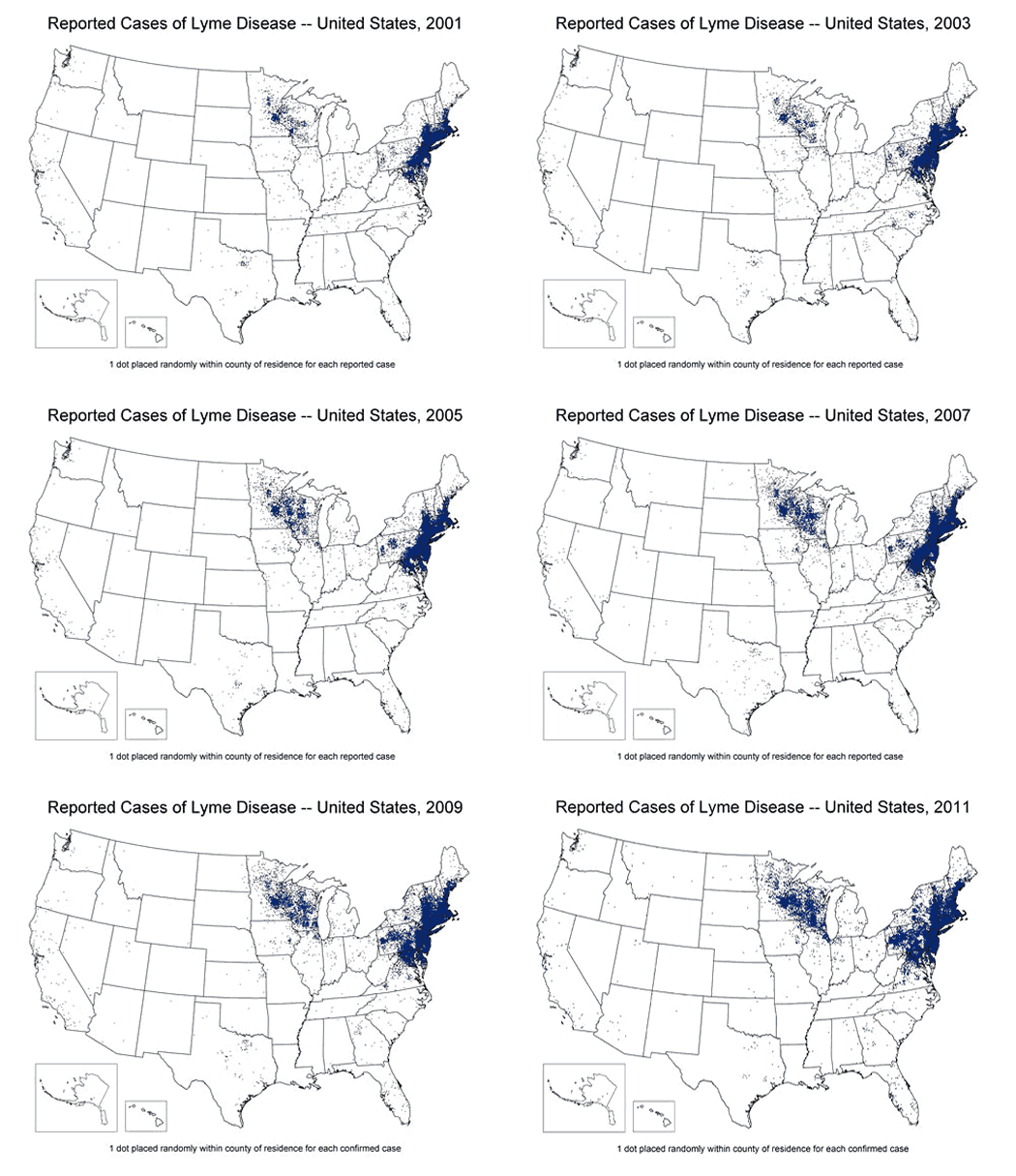
Reported cases, year by year, from 2001-2011. Maps: CDC.
This is sobering: The federal Centers for Disease Control and Prevention had reported that the national number of Lyme disease cases had been about 30,000 per year over the last few years. But this week it reported that preliminary estimates based on new research indicate the number is around 300,000.
So... that's a lot more.
From the CDC press release:
This early estimate is based on findings from three ongoing CDC studies that use different methods, but all aim to define the approximate number of people diagnosed with Lyme disease each year. The first project analyzes medical claims information for approximately 22 million insured people annually for six years, the second project is based on a survey of clinical laboratories and the third project analyzes self-reported Lyme disease cases from a survey of the general public.
Each year, more than 30,000 cases of Lyme disease are reported to CDC, making it the most commonly reported tick-borne illness in the United States. The new estimate suggests that the total number of people diagnosed with Lyme disease is roughly 10 times higher than the yearly reported number. This new estimate supports studies published in the 1990s indicating that the true number of cases is between 3- and 12-fold higher than the number of reported cases.
CDC says the three studies are still ongoing and it continues to analyze the data to "refine the estimates and better understand the overall burden of Lyme disease in the United States."
In 2011, the latest year for which the numbers are online, New York State had 3118 confirmed cases of Lyme (and 1372 more "probable" cases), according to the CDC. That amounted to 16 confirmed cases per 100,000 people -- the 12th highest rate in the nation. If the actual number of cases is something like 10x that reported count, New York is looking at a rate of 160 cases per 100,000 people.*
Planning for the future of Thacher and Thompson's Lake State Parks
As the draft plan notes: Thacher Park's "magnificent panorama has no parallel in the capital district."
The state Office of Parks, Recreation & Historic Preservation is currently in the process of planning a bunch of upgrades for John Boyd Thacher and Thompson's Lake State Parks.
The draft plan is wide ranging, from relatively straightforward and much-needed stuff (like new bathrooms) to a redesign of the some of the park's most-used areas. Also part of the proposed plan: officially combining Thacher and Thompson's Lake into one park. A lot of the changes wouldn't happen overnight -- the plan's timeline could extend as long as 15 years. And, of course, everything is subject to the availability of funding.
There's a public hearing on the proposed master plan for the parks this Thursday (August 1) at the New Scotland town hall at 7 pm.
The planning docs are posted online. We read them through them this afternoon and pulled a few quick-scan highlights.
Watching for cicadas
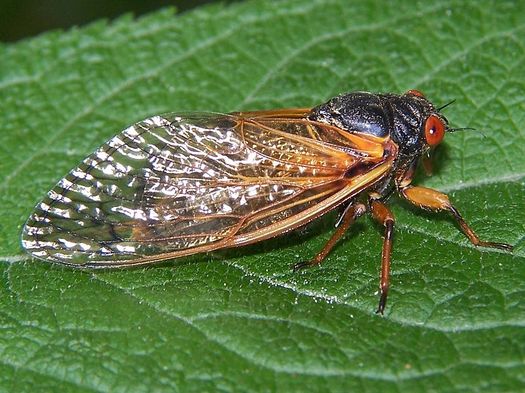
An adult periodical cicada. The red eyes really make the look.
Perhaps arriving soon: the periodical cicada. A "brood" of the fantastically weird insects -- that climb from the ground every 17 years to molt, sing, mate, lay their eggs, and die -- are emerging along the East Coast this month. And we could see some of them in the Capital Region.
This particular cohort of cicadas -- Brood II, or "The East Coast Brood" -- last emerged in 1996. In previous appearances, its range has stretched from North Carolina to northern New York.

RUST at Radix
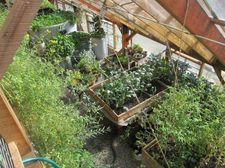 Coming up at the Radix Center in Albany: Regenerative Urban Sustainability Training (RUST), June 1-2. The workshop is focused on "skills for building ecologically resilient communities in today's cities." Blurbage:
In this class, Scott Kellogg and other sustainability experts give attendees a "toolbox" of techniques and knowledge usable by anyone wanting to create sustainable systems in their own communities. Through a combination of group hands-on activities and lectures, participants will learn how to build infrastructure for self-reliance that is simple, affordable, and replicable. These systems can be applied in either urban or rural environments.
The topics range from aquaponics to beekeeping to vertical farming to vegetable oil vehicles.
The cost for the workshop $150-$350, and includes meals. Space is limited.
Earlier on AOA: Startup contest update: The Radix Center
Woman bitten by potentially rabid fox in Cohoes
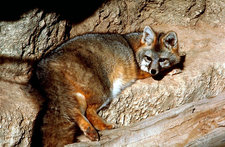 The Albany County Department of Health reported today that a woman in Cohoes was bitten by a potentially rabid grey fox this morning (area map). The fox got away, and officials are urging people to keep an eye out for wild or stray animals that are acting strangely -- and call 911 if one is sighted.
Update: A fox -- maybe the fox -- was shot by Cohoes police later in the day. Update update: The fox that was shot tested positive for rabies, Cohoes police say. [TU] [@CBS6Jennifer]
Rabid foxes turn up now and then in this area. Three foxes tested positive for rabies between January and October of 2012 -- one each in Albany, Rensselaer, and Saratoga counties -- according to the most recent data posted by the state DEC. There were also three positives in 2011 -- two in Saratoga County, and one in Schenectady County. Statewide that year there were 26 positive tests for rabies in foxes, 21 of those in grey foxes.
Back in 2010 a man was bitten by a rabid fox in Greenwich, in a scene that sounds like something from a B movie. From the Daily Gazette:
Richard Leddy, 40, said he was lying on the town beach reading when he heard someone in the water say, "Oh look, there's a fox."
"I thought they meant on the other bank, but then I heard a snarl and looked over to see the fox in mid-leap," Leddy said. "Next think I knew he'd sunk his teeth into my arm."
Yikes.
The animals that most often turn up with positive rabies tests in the state, at least over the last few years, are raccoons and bats. In 2011, there were 162 raccoons that tested positive, and 64 bats. (That's just a raw count of positive tests by the state lab, not a measure of prevalence within the population of those animals compared to other animals.)
In fact, the last two people to die of rabies in New York State -- in 1995 and 1993 -- got it from a bat, according to the state's Wadsworth Center.
Earlier on AOA:
+ "Pet" gray fox on the loose in Troy
+ Fox stalking
photo of a grey fox (*not* the grey fox in Cohoes): US Fish and Wildlife Service via Wikipedia

The Karner Blue as another sign from the Year of Odd Weather
They find the weather strange, too.
Another effect of the non-winter/early spring: Karner Blue butterflies have managed to squeeze out an extra generation this summer. From an Albany Pine Bush Preserve press release:
Karner blue butterflies typically have two broods per year, one in May/early June and the second in July. The discovery of a third brood is both remarkable and a bit alarming to Preserve scientists because the eggs produced by the July brood of adult Karners typically overwinter to produce adult Karners the following May. An early and very warm spring is the suspected cause of earlier broods this year and the additional late-season butterflies currently flying in the Preserve. The impacts of a third flight of adults to the long-term recovery of the species are unknown. ...
Only time and continued monitoring will determine if the late 2012 hatch will have an impact on the 2013 butterfly population and the longer-term recovery of the species. "We had no idea a third flight in a single season was possible before 2010" said [Albany Pine Bush Preserve Conservation director Neil] Gifford. According to Gifford, it was in 2010 that Karner blue butterfly managers from Wisconsin to New Hampshire suspected that the late season adults they were seeing may be a previously unknown third flight. "We don't yet have a good understanding of what the implications of a third brood will mean for the recovery of the species" said Gifford, adding "it will likely depend on whether the changing climate brings such conditions more frequently."
The preserve says this spring's emergence of Karner Blues was the earliest on record -- 10 days earlier than the previous record, and 21 days earlier than the 20-year average.
To say that the weather over the past year is odd would be an understatement. A handful of the signs and side effects:
Now emerging: Karner Blues
Beautiful and rare.
The Albany Pine Bush Preserve Commission announced today that it has 600 Karner Blue butterflies emerging from their cocoons right now. From the press release:
Adult female Karners are captured from New York sites and immediately transported to the rearing facility in Concord, NH. Eggs produced by these butterflies are raised to chrysalises and returned to the Albany Pine Bush Preserve. The adults that emerge are released into restored habitat to begin new colonies. ...
"This is a very exciting, and very limited chance to see this Federally endangered butterfly," says Discovery Center Director Jeffrey Folmer. "One question visitors often ask is 'Where can I see the Karner blues?' These beautiful, but tiny butterflies are rare, hard to spot, live only three to five days and are difficult to distinguish from other similar non-endangered butterflies. We now have 600 of them emerging from their chrysalises one by one and they're on view until they all emerge."
The commission says butterflies will available for viewing at the Albany Pine Bush Discovery Center until mid-July. Admission is free.
The Albany Pine Bush -- a sandy inland pine barren -- is one of the Karner Blue's native habitats (there aren't many remaining). In fact, the butterflies are called "Karner Blues" because of the no-longer hamlet of Karner, New York. Vladimir Nabokov -- yep, the author -- stopped to study the butterflies there in 1950 and ended up naming them. Nabokov once described the insects as being "like blue snowflakes."
Earlier on AOA:
+ The Karner Blue
+ Why the Albany Pine Bush is sandy
+ On state animals, vegetables and whatnot
photo: courtesy of the Albany Pine Bush Preserve Commission
A heads up when something could stink about the Hudson River
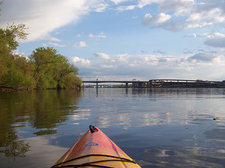 Passed during the end-of-session rush at the Capitol: the "Sewage Pollution Right to Know Act." The environmental org Riverkeeper explains:
The Sewage Pollution Right to Know Act, once signed by the Gov. Andrew Cuomo will make public reporting about unsafe water conditions nearly as routine as severe weather warnings. The law will require public wastewater treatment plants to publicly disclose within four hours of releasing raw or partially-treated sewage. The state will also for the first time report annually on reported sewage discharges.
This is an important issue around here because of something called "combined sewer overflows" (CSOs). Basically, when many of the antiquated sewer systems in this area become overwhelmed with storm water, they start dumping the excess -- sewage and all -- into the Hudson and its tributaries. Yep, eww.
Riverkeeper did testing last year for sewage-indicating bacteria in Hudson -- and two of the worst spots for contamination were near Albany (Island Creek/Normans Kill in Glenmont, and the Dunn Memorial Bridge). The org reported that the Capital Region's CSOs "dump an estimated 1.2 billion gallons of combined sewage and wastewater into the Hudson each year."
[via @AndyArthur]
Earlier on AOA: Something stinks about the Hudson near Albany (includes some good discussion in the comments)
photo: Flickr user andyarthur (cc)
The spread of Lyme disease
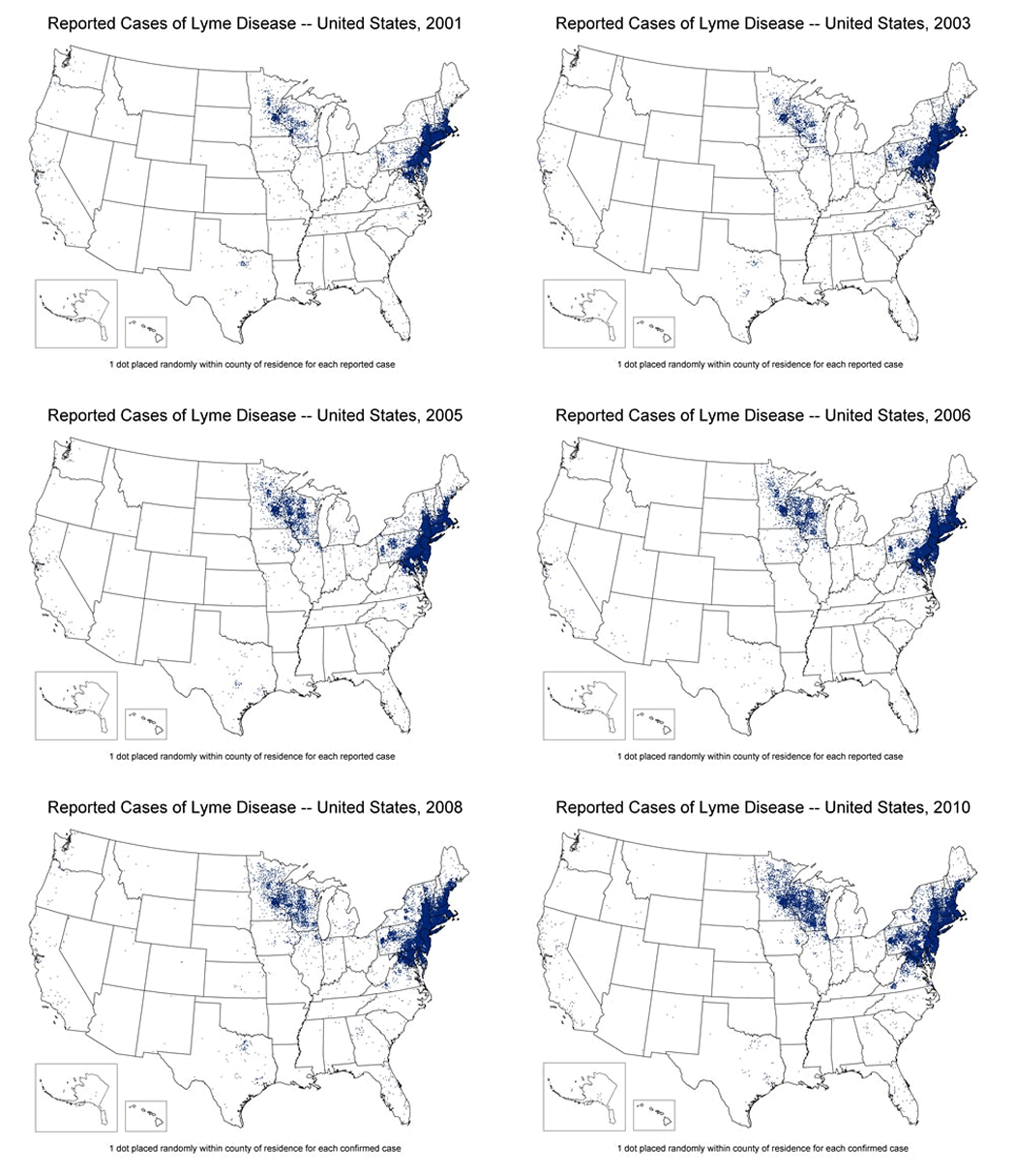
Reported cases, year by year, from 2001-2010.
Mappage: We came across this CDC map of reported Lyme disease cases over the last decade (ending in 2010). The CDC site allows you to switch from year-to-year -- we piled all those years into the animation above.
The thing that struck us about the map is the way it illustrates how Lyme has spread from the coast and the very central part of the Hudson Valley to the entire Northeast (as well as Wisconsin and Minnesota).
As it happens, the number of reported cases in New York was down noticeably in 2010, the last year for which the data's posted by the CDC. The state's incidence rate that year -- confirmed cases per 100,000 people -- was 12.3 that year (12th highest in the country). It was 21.2 in 2009, and 29.5 in 2008.
Delaware led the nation in 2010 with a rate of 73.1. Vermont's rate was 43.3 that year, and Massachusetts' 36.3.
Earlier this spring a research org in the Hudson Valley -- the Cary Institute for Ecosystem Studies -- reported the "northeastern U.S. should prepare for a surge in Lyme disease this spring." And the reason wasn't the mild winter. Rather, researchers based their projections on mice and acorns:
The North Greenbush bear lands, softly
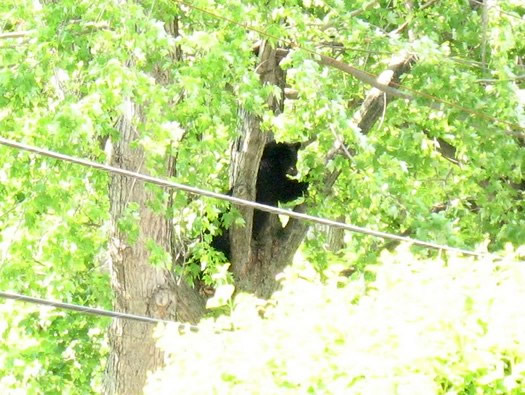
All this attention? For me?
After spending most of Wednesday hanging out in a tree, the North Greenbush bear finally came down shortly after 4 pm. It wasn't by choice -- he had been hit with a tranquilizer dart -- but it was a soft landing, apparently.
"This guy went down pretty good," said NYS DEC police lieutenant Jim Hays shortly after the landing. Hays said the bear appeared to hit the ground softly while zonked on tranquilizers. "They're like a big bowl of jello when they land."
The black bear had climbed a a large tree in the front yard of a house on Meadow Dr, just across Williams Road from the North Greenbush Town Park. DEC had originally planned to let the bear come down on his own. But after he seemed content to sit in the tree for hours, DEC decided it was time to move things along.
Hays said they were worried about the situation becoming a public safety issue. Williams Road was filling with rush hour traffic. A large crowd of media and onlookers had gathered just on the other side of road. And Hays said people had started to circle around the scene for a better look, cutting off potential escape routes for the bear.
This most recent bear is the third one captured in the the core Capital Region in the last couple of weeks -- the other two were in Albany and Schenectady. There was also a bear
"We need to learn how to live with them," Hays said, describing Albany and Rensselaer counties as bear country. "They're not going to go away."
As with the other recently captured bears, DEC will keep the North Greenbush bear overnight for observation. If he checks out OK, Hays says they'll take him some place more bear appropriate and release him.
There are a bunch of photos from today's scene after the jump.
Wanted, dead or live: feral pigs
Interesting story in the New York Times this weekend about a population of feral pigs in the Champlain Valley, about 150 miles north of Albany. DEC officials are worried the population will permanently establish itself, spread, and threaten farms and Adirondack habitats:
Perhaps most worrisome is their reputation as eating machines: the pigs devour ground-nesting birds and reptiles, fawns and domestic livestock, native vegetation and crops. Feral pigs have already proliferated in parts of western New York. But state officials are drawing a line in the topsoil, so to speak, determined to protect both the agrarian economy and the fragile ecosystem from the nascent herd -- or "sounder" in swine-speak -- in the town of Peru.
"There's a real sense of urgency," said Ed Reed, a wildlife biologist for the state's Department of Environmental Conservation. "Once the pigs get established, they are very difficult to eradicate completely."
And what are they using to lure the pigs into traps: Jello-laced donuts.
The DEC says "people with a small game license may shoot and keep feral swine at any time and in any number." The resulting pork is said to be rather tasty -- although in some cases apparently there isn't enough sage to cover up the stink.
Feral pig populations are widespread in the South and California -- causing so many problems, in such great numbers, that as an official remarked: "With over 2 million hogs in Texas, we're not going to barbecue our way out of this problem." The animals reportedly cause $400 million in damage there each year and people have resorted to shooting them from helicopters.
photo: NYS DEC
New York State's 2011 bear "harvest"
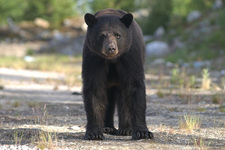 The state Department of Environmental Conservation reports there were 1258 bears killed by hunters in New York in 2011. That's up about 18 percent from 2010 -- and higher than the five-year average (1,152) -- but short of the record on the books (1864 bears in 2003).
Last year's total did include a record number for the sub area that covers part of the Capital Region. The DEC attributes the record to bear hunting being opened in counties stretching from Rockland and Westchester counties north to Washington County. The cover of the DEC report includes a photo of a hunter with a bear killed in Columbia County, which the agency says might have been the first bear taken in the county since the 1800s.
Capital Region
There were 26 bears killed in the Capital Region's core counties last year: Albany (4), Rensselaer (11), Saratoga (11).
Counties in the greater Capital Region: Columbia (10), Greene (68), Schoharie (19), Washington (20), Warren (27).
In recent years DEC has said that bear populations in the state are "thriving."
By the way: the word used by the DEC to describe a year's take of bears (and deer) is "harvest" -- which makes sense. But it always makes us think of a field of bears growing in rows. And we suspect the bears have a different word for it.
Earlier on AOA: Don't feed the bears
photo: Flickr user peupleloup
Unmanufacturing in Troy
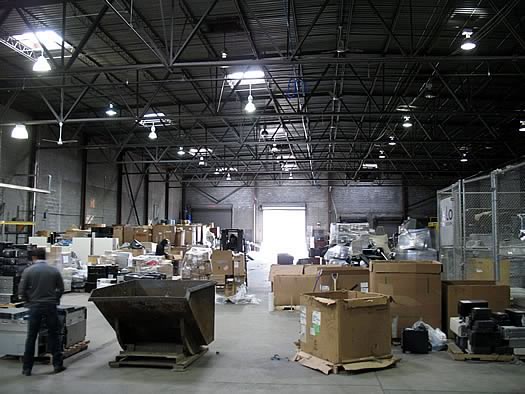
Where electronics start their afterlife.
Electronic gadgets are everywhere -- and in greater numbers every day. It's one side effect of an industry in which an item is considered "old" if was released just a year ago.
So, these items often have a short lifespan. And when the end comes, they have to go somewhere -- and increasingly, that place is not a landfill. As of the start of this year, businesses and municipalities in New York State are no longer allowed to pitch electronics into landfills. And by 2015 that restriction will apply to everyone -- even individuals.
With that in mind, a recent invitation to check out an electronics recycling business in south Troy made us curious to see where this stuff goes.
Well, that, and we almost never pass up the opportunity to see stuff get crushed.
White Nose Syndrome continues to kill off bats
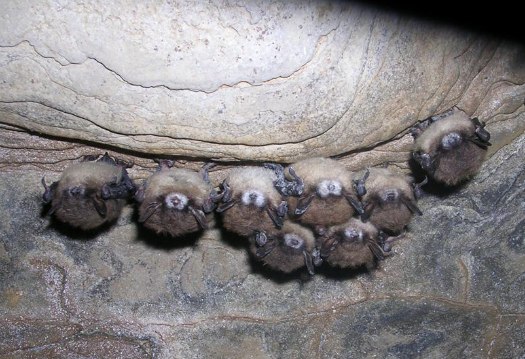
Bats with White Nose Syndrome in Hailes Cave in Albany County.
White Nose Syndrome -- the bat disease first identified in the Capital Region -- has killed as many as 6.7 million bats, according to recent estimates by biologists working with the US Fish and Wildlife Service. Since first being documented in 2006, the disease has now spread to 16 states -- and at many sites it's killed almost 100 percent of the bats. It has some biologists worried that some once-common varieties of bats could be facing extinction. [US FWS] [NYT]
The "white nose" in the syndrome's name refers to a fungus that grows on the face of the bats. Last fall researchers confirmed the fungus was responsible for the syndrome after 100 percent of the bats exposed to it in captivity developed the symptoms in a study. The fungus infects the bats' skin and causes lesions. [Nature News]
In 2010, New York State's Department of Environmental Conservation reported the White Nose Syndrome was likely in all bat caves in the state. The population of some species of bat had declined by 90 percent. [NYS DEC]
The disease was first identified in Howes Cave in Schoharie County -- it spread to other caves in the region and large bat die-offs followed.
Bats don't necessarily have the best reputation with a lot of humans, but they're an important part of the ecosystem because they eat huge numbers of insects -- including mosquitos.
photo: Nancy Heaslip, NYS DEC
This just in: the Adirondacks have a lot trees
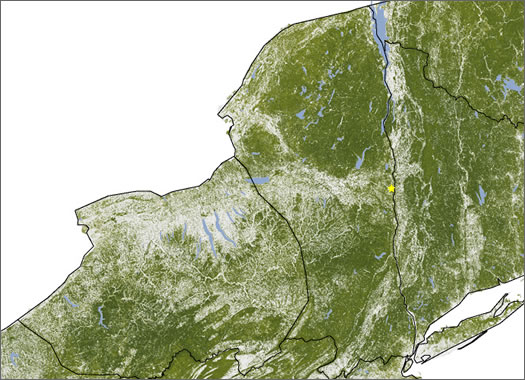
Where the trees are in New York. (We added the star for the approximate location of Albany as a point of reference.)
Forestry fact of the day: the Adirondacks are one of the areas with the most tree mass in the country, according to a map of "above ground woody biomass" created by the NASA Earth Observatory.
A clip from the map, of New York State, is above. The darker the green, the more tree mass there is.
The national map is posted after the jump in large format. You can see the large swath of forest that runs from Maine, through New Hampshire and Vermont, includes eastern New York, and then runs along the Applachians. And as dense as parts of the swath are, the long, narrow (relatively speaking) forests of the West Coast still trump the East for density of tree stuff (the trees are rather large out there).
Researchers built the map as part of an effort to better understand how much carbon is stored in forests -- and which way that amount is trending.
[via Buzzfeed]
Earlier on AOA: The darkness just to the north
Something stinks about the Hudson near Albany
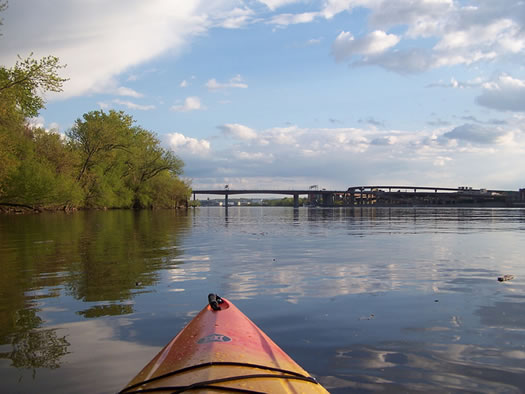
The Hudson River at the Dunn Memorial Bridge was among the 10 worst spots in the study.
The environmental org Riverkeeper released a report this week on Hudson River sewage contamination levels -- and the results for this part of the Hudson were... uh... gross.
Riverkeeper's testing found sewage-indicating bacteria levels were above acceptable limits more than 50 percent of the time at both Island Creek/Normans Kill in Glenmont (65 percent of the time) and the Dunn Memorial Bridge in Albany (50 percent). Those two spots were among the top-10 worst of all the spots tested. The data for all the locations tested are posted online -- and table with local data is after the jump.
So, what's causing this problem? The Capital District's combined sewer systems dump untreated sewage into the river when they're over capacity (example: after a heavy rain).
Riverkeeper says the systems release 1.2 billion gallons of untreated sewage and wastewater into the river each year.
The Karner Blue
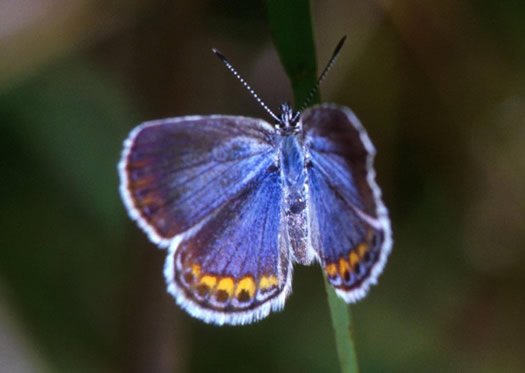
Nabokov once described the a group of Karner Blues appearing like "blue snowflakes".
The first flight of Karner Blue butterflies should be appearing in their habitats around the Capital Region right about now.
The beautiful endangered butterflies hang around sandy pine barren habitats. Two such spots in the Capital Region: the Albany Pine Bush Preserve and the Wilton Wildlife Preserve. Drew was at the Wilton preserve this past week and said the butterflies were easy to spot.
Karner Blues congregate in these habitats because they're also the habitat for blue lupine. The butterflies lay their eggs on the plants.
There's some great history Capital Region history involving the Karner Blue. The common name of the butterflies is linked to a spot here -- and Vladimir Nabokov classified the butterflies. Yep, the author.
What the frack is going on?
In the event you were holding out on learning about hydrofracking until it was all set to music, your moment has arrived. The video embedded above was produced by NYU students as part of a collaboration with the journalism org Pro Publica.
Hydrofracking is potentially one of the biggest environmental issues facing the state. A rather large deposit of hard-to-reach natural gas runs through the state. And energy companies are reportedly eager to give it a good fracking. That could mean significant economic gain -- and significant environmental problems.
Pro Publica has been all over the issue. Oh, and that part about flammable water -- true, in some cases.
Sheep eat the baaaaad
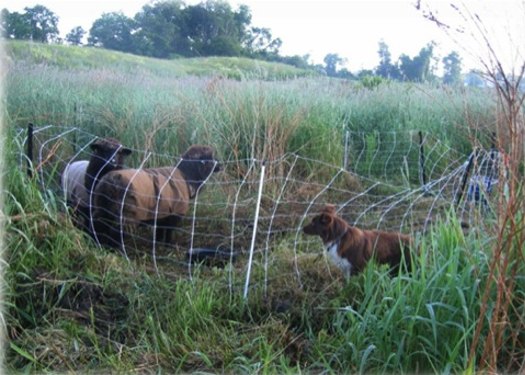
Sheep -- and dogs -- will be working to clear invasive plants from the Normanskill Farm.
There's a new (old) way to combat invasive plant species in upstate New York: small flocks of sheep.
Gary Kleppel, a professor of biological sciences at UAlbany and director of the Biodiversity Conservation and Policy Program there, is in the process of setting up a "targeted grazing" project using sheep at Albany's city-owned Normanskill Farm.
His sheep start arriving in a few weeks and then, with the help of students, dogs, and a fancy fence, the sheep get to work -- eating and gnawing at the plants that cause problems for our ecosystem.
... said KGB about Drawing: What's something that brought you joy this year?